
SAN ANTONIO — In the echo chamber of modern sports media, the debate over who holds the title of “Greatest of All Time” (GOAT) has become a daily ritual. It is a relentless tug-of-war between the statistical dominance of LeBron James and the unblemished mystique of Michael Jordan. For years, legends of the game have offered polite, diplomatic answers, wary of alienating fanbases or disrespecting the current generation. But George “The Iceman” Gervin, one of the smoothest and most lethal scorers in NBA history, has never been one to mince words. And in a recent sit-down that has since gone viral, Gervin didn’t just enter the debate—he blew it up.
The Hall of Famer, known for his cool demeanor and unstoppable finger roll, delivered a scathing critique of the entire conversation, calling the LeBron vs. MJ debate a “joke.” But it was his detailed reasoning, particularly his dismantling of the modern era’s physicality and mentality, that has sent shockwaves through the basketball world.
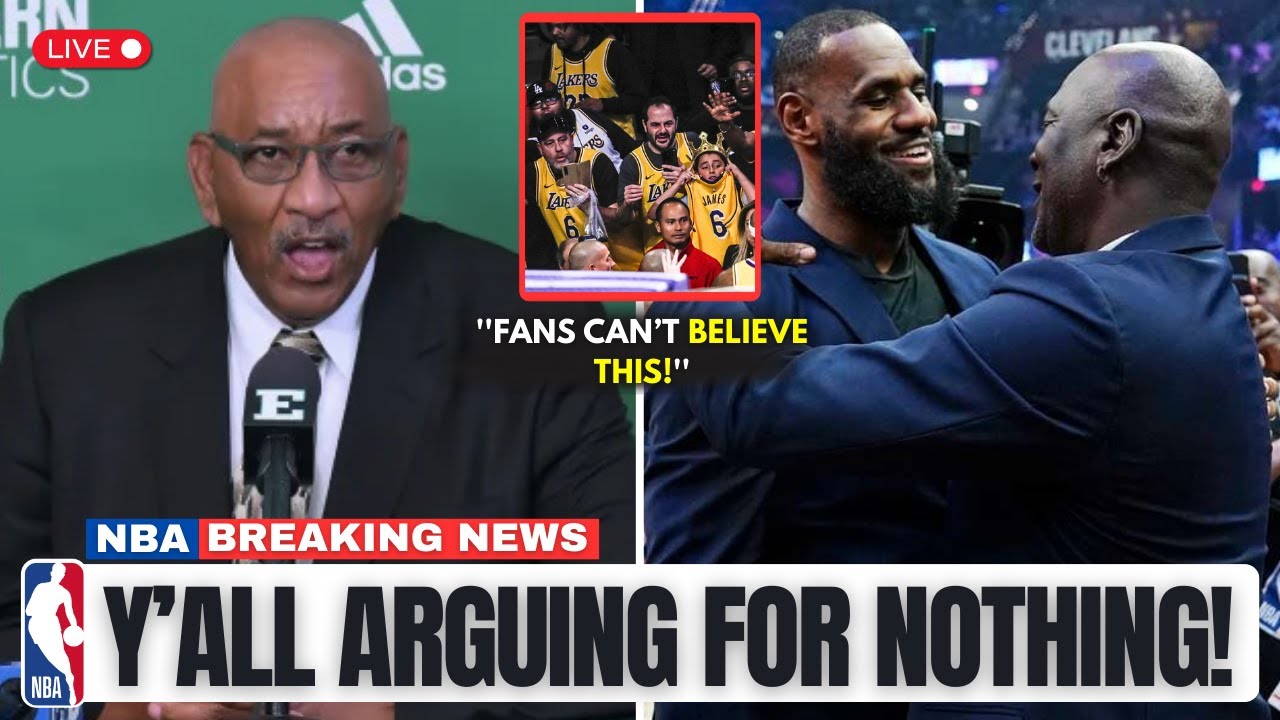
“This Era is Soft”
The catalyst for the current online firestorm was Gervin’s blunt assessment of the modern NBA. When asked to compare the greatness of James and Jordan, Gervin pivoted to the environment in which they played.
“LeBron is the best player of this era,” Gervin admitted, offering a momentary olive branch before dropping the hammer. “But this era is soft.”
To a generation of fans who have grown up watching high-scoring, pace-and-space basketball, the word “soft” is the ultimate insult. However, Gervin wasn’t using it as a slur, but as a technical observation from a man who survived the trench warfare of the 1970s and 80s. He pointed out the elimination of hand-checking, the protection of offensive players, and the obsession with the three-point line that leaves the paint wide open.
“You can’t hand check. You can’t play real defense without getting called for a foul,” Gervin argued. “Guys are shooting threes from the logo and the lane is wide open because everybody’s standing on the perimeter. Don’t get me wrong, these guys today are skilled, but skilled and tough are two different things.”
Gervin’s perspective offers a sobering reality check. He played in an era where driving to the basket meant risking physical harm, where enforcers roamed the paint, and where “load management” was a foreign concept. By contrasting this with the “bubble” environment and the offensive-friendly rules that benefit James, Gervin suggested that modern stats are inflated, making a direct comparison to Jordan’s numbers intellectually dishonest.
Calculated vs. Possessed: The Mentality Gap
While his comments on the era were controversial, his psychological profile of the two icons was revelatory. Gervin, who witnessed Jordan’s rise firsthand, drew a sharp line between “smart” basketball and “killer” basketball.
He described LeBron James as “calculated,” a player who almost computer-like processes the game to make the statistically correct play. “He’ll pass to the open man even if it’s the Finals. That’s smart. That’s unselfish,” Gervin noted.
But then, his tone shifted to one of reverence—and perhaps a little fear—when discussing Michael Jordan. “Mike was different,” Gervin said, shaking his head. “That man was possessed.”
According to Gervin, the separation isn’t in the box score; it’s in the soul of the competitor. He described Jordan not just as a winner, but as a destroyer. “Mike wanted to take your heart. He wanted the last shot, the big moment, the dagger.”
This distinction touches on the core of the GOAT argument. LeBron’s defenders often cite his high basketball IQ and willingness to make the right play as evidence of his superiority. Jordan’s defenders, however, view his refusal to lose—and his demand to take the responsibility of the final outcome—as the trait that elevates him above everyone else. Gervin clearly sides with the latter, implying that while LeBron plays to win, Jordan played to dominate.
The “Joke” of Comparison

Perhaps the most profound point Gervin made was his rejection of the debate itself. By calling it a “joke,” he wasn’t insulting the players, but rather the culture that feels the need to rank them.
“Great doesn’t mean greatest,” Gervin stated. He expressed frustration with how the obsession with the GOAT title forces people to tear down legends. To praise LeBron, fans feel they must diminish Jordan. To exalt Jordan, critics feel they must mock LeBron’s Finals losses.
Gervin reminded viewers that the history of the NBA didn’t start in 1990. He name-dropped titans like Wilt Chamberlain, Bill Russell, Kareem Abdul-Jabbar, and Magic Johnson, questioning why they are conveniently left out of the conversation. “Ain’t nobody got more championships than Bill Russell,” he reminded the interviewer.
His argument is that greatness is context-dependent. You cannot compare a center from the 1960s to a shooting guard from the 90s or a point-forward from the 2020s. The rules, the equipment, the travel, and the medical science are all radically different. By trying to flatten 75 years of history into a single ranking, Gervin argues, we are disrespecting the unique challenges each legend overcame.
The Internet Reacts: A Civil War
As expected, Gervin’s “soft” comment acted as gasoline on an already burning fire. Within hours of the interview surfacing, social media split into two hostile camps.
LeBron James loyalists immediately went on the offensive. They labeled Gervin a “hater” and a “dinosaur,” accusing him of being a bitter old player jealous of the money and fame modern stars enjoy. They flooded Twitter with highlights of LeBron’s physicality, citing his longevity and his ability to drag mediocrity to the Finals as proof that he would dominate in any era.
Conversely, Michael Jordan fans felt vindicated. To have a Hall of Famer—someone who actually played against the greats—validate their belief that the modern game is “easy” was the ultimate trump card. They circulated Gervin’s quotes like scripture, using his “possessed” description of Jordan to mock LeBron’s passive moments in big games.
The Silent Majority?
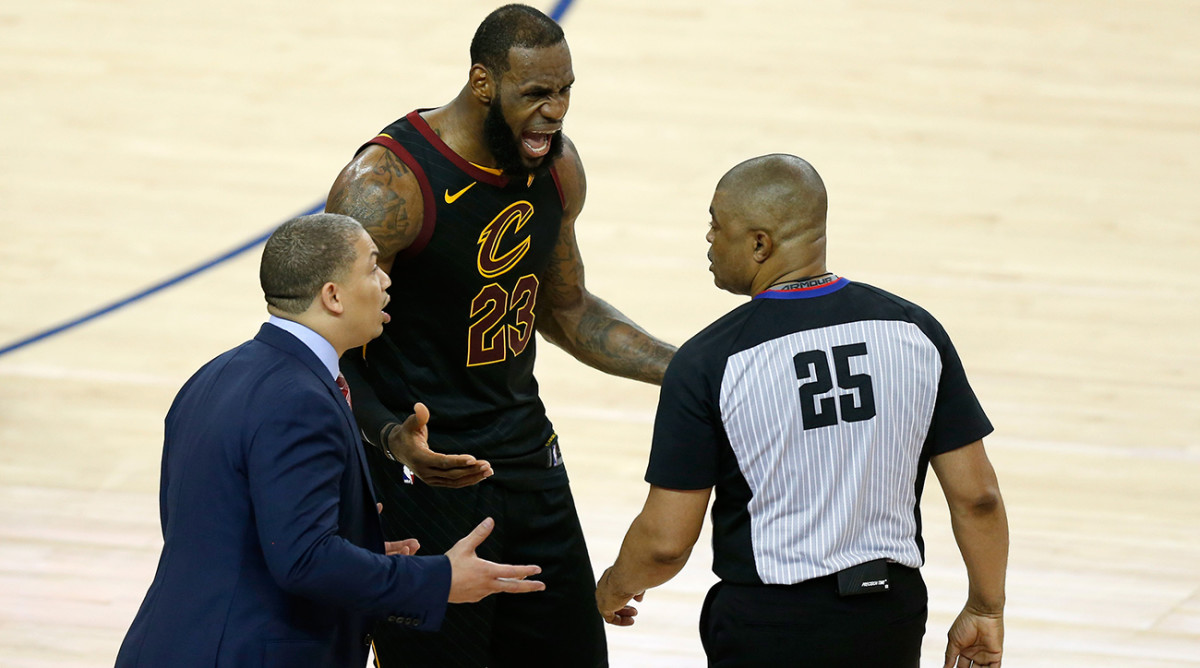
Interestingly, while the fans screamed, the fraternity of NBA players remained largely silent. There were no clap-backs from LeBron, no defensive tweets from current stars. This silence speaks volumes. It suggests that perhaps, behind closed doors, many in the basketball world agree with Gervin.
There is a quiet understanding among hoopers that the game has changed. The freedom of movement rules have undeniably unleashed offensive explosions, leading to inflated scores that would have been impossible in the 90s. While current players defend their skill level, few can argue that the physical toll of the game is the same as it was when the Detroit Pistons were clotheslining people in the paint.
A Call for Appreciation
Ultimately, George Gervin’s “rant” was a plea for perspective. In a world driven by hot takes and engagement farming, he offered a nuanced, albeit harsh, reality.
“I know who I think is the best,” Gervin concluded. “But my opinion doesn’t change what LeBron did. It doesn’t change what Jordan did.”
He challenged the basketball community to stop treating legacy as a zero-sum game. We can acknowledge that LeBron James is an athletic marvel who mastered the modern game, while simultaneously admitting that Michael Jordan possessed a competitive psychopath’s edge that may never be seen again. We can admit that today’s players are more skilled shooters, while also admitting that the era they play in protects them in ways the legends of the past could only dream of.
George Gervin may think the debate is a joke, but the reaction to his words proves that for millions of fans, it is serious business. And as long as the NBA exists, the ghost of Chicago and the King of Los Angeles will continue to battle for a throne that, according to the Iceman, might not even exist.
News
How a Black Female Sniper’s “Silent Shot” Made Germany’s Deadliest Machine Gun Nest Vanish in France
Chicago, winter 1933. The Great Depression had settled over the Southside like a fog that wouldn’t lift. The Carter family…

Polish Chemist Who Poisoned 12,000 Nazis With Soup — And Made Hitler Rewrite German Military Law
The German doctors at Stalag Vic never suspected the mute Polish woman who scrubbed their floors. November 8th, 1944. Hemer,…

This Canadian Fisherman Turned Sniper Killed 547 German Soldiers — And None Ever Saw Him
November 10th, 1918. 3:37 in the morning, a shell crater in Belgium, 40 yards from the German line. Silus Winterhawk…

They Called Him a Coward for Refusing to Fire — Then His ‘Wasted’ 6 Hours Saved 1,200 Lives
At 11:43 a.m. on June 6th, 1944, Private Firstclass Daniel McKenzie lay motionless in the bell tower of St. Mirly’s…

Steve Harvey Stopped Family Feud After Seeing This
The studio lights were blazing. 300 people sat in the audience, their faces bright with anticipation. The Johnson family stood…

He Was a Hungry Teen — Until One Woman Changed His LifeForever
Steve Harvey stands frozen. The Q cards slip from his fingers and scatter across the studio floor. 300 audience members…
End of content
No more pages to load