At 3:07 in the morning on August 21st, 1942, Colonel Kona Ichiki crouched behind a fallen palm tree on the east bank of Alligator Creek on Guadal Canal, watching the sandbar that stretched 50 yards across Black Water to the American lines. Behind him, 817 men of Japan’s elite 28th Infantry Regiment waited in silence, bayonets fixed, convinced they were about to overrun a few thousand Marines and recapture Henderson Field in a single night attack.
Across the creek, Private Al Schmid fed a 250 round belt into his water cooled Browning machine gun, the weapon that would help kill more than 200 attackers before dawn. Between them sat a 37mm anti-tank gun loaded with canister, 122 steel balls packed into a tin case that would turn the sandbar into a killing field.
But 6 weeks earlier, Ichiki had received clear orders from General Hyakutaki at Rabul. Land at Tyu Point, wait for the rest of your regiment to arrive, then attack with your full strength of over 2,000 men. Instead, after his advanced patrol was discovered by Marines on August 19th, Ichuki made a decision that would destroy his command and change the course of the Pacific War.
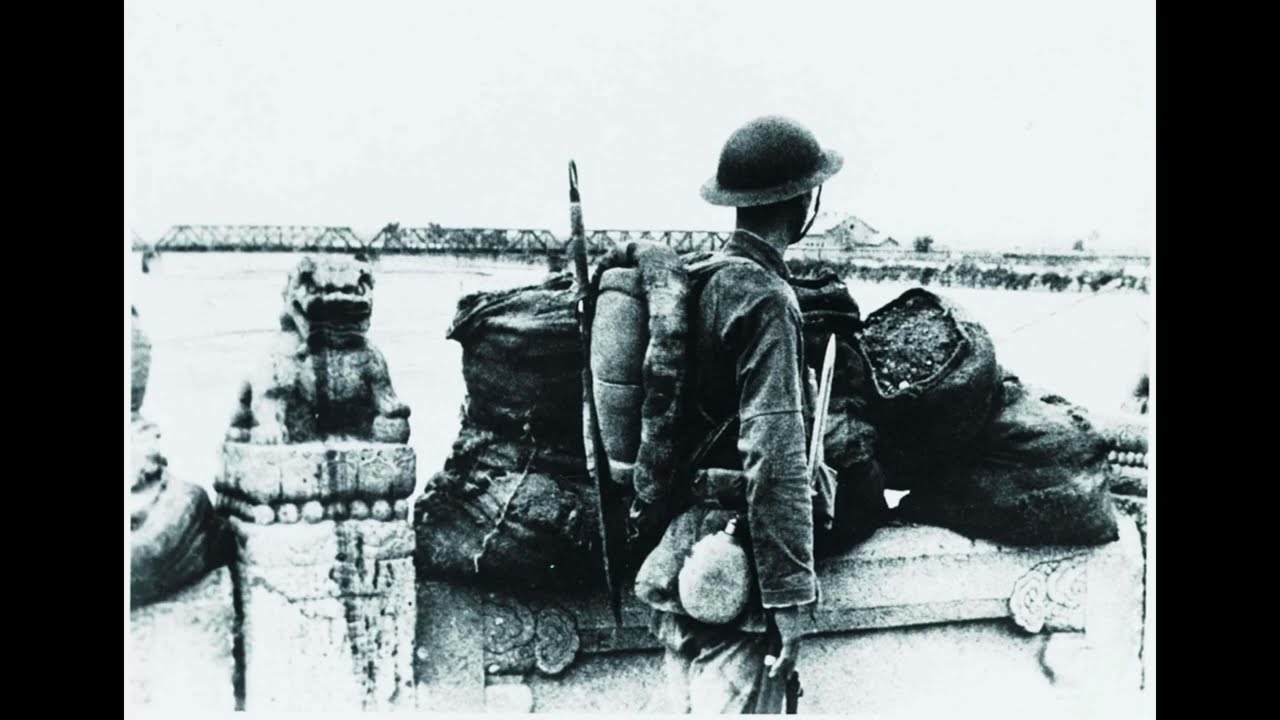
He would attack immediately with just 900 men, believing Japanese fighting spirit could overcome any American defense. His officers had seen him do this before. At Marco Polo Bridge in 1937, he helped trigger the full war with China by refusing to wait for negotiations. At midway 3 months earlier, his regiment was loaded for an amphibious assault that never came, leaving his men frustrated and eager to prove themselves.
Now on Guadal Canal, facing what he thought were only a few thousand Americans with no serious artillery, Ichi was convinced he could succeed where caution would fail. But the Marines weren’t just a few thousand. They were 11,000 strong, dug in around the airfield with 75mm howitzers, 105mm guns, and a new doctrine that would pull the Japanese into prepared fields of fire.
What Aiki didn’t know was that his night attack, the tactic that had terrorized Chinese units for 5 years, was about to meet 20th century American firepower in a test that would leave 800 of his men dead on one beach in 12 hours. The first shots of what would become the second SinoJapanese War rang out on the night of July 7th, 1937 near the Marco Polo Bridge outside Beijing.
Colonel Konow Ichiki, then a staff officer with the China Garrison Army, stood in the command post as reports filtered in about a missing Japanese soldier during night maneuvers. The man had likely wandered off to relieve himself, but Ichuki and his fellow officers saw an opportunity that caution would waste.
While diplomats urged restraint, Ichuki helped draft the orders for immediate retaliation against Chinese positions. The missing soldier turned up unharmed hours later. But by then, Japanese artillery was already pounding Chinese fortifications. Ichuki had learned his first lesson in aggressive leadership. When faced with uncertainty, attack before the enemy can prepare.
5 years later, that same philosophy would bring him to a sandbar on Guadal Canal. But first came the Phantom Invasion that never was. In early June 1942, Ichiki commanded the 28th Infantry Regiment’s detachment aboard transport steaming toward Midway at his men loaded with assault gear and 3 days of rations for what promised to be a quick amphibious landing.
The regiment had trained for months in beach assault tactics, perfecting the night attack methods that had shattered Chinese resistance from Shanghai to Nanking. Ichuki’s troops carried Type 99 rifles with their distinctive 7.7 mm cartridges, type 92 heavy machine guns capable of 450 rounds per minute, and the peculiar type 89 grenade dischargers that Americans would later call knee mortars.
Each man believed he was part of an unstoppable force that would seize Midway’s airirstrip and turn the Central Pacific into a Japanese lake. Then came the radio message that changed everything. Admiral Nagumo’s carrier force had been devastated by American dive bombers on June 4th, losing four fleet carriers in a single day.
The Midway invasion was cancelled. Ichiki’s transports turned around and steamed back to Japan, his regiment never having fired a shot. For a man who had spent his career believing that swift action prevented enemy preparation, the enforced inaction felt like a betrayal of everything he had learned about warfare. His troops, trained a fever pitch for an assault that would never come, returned to their barracks, frustrated and eager to prove themselves against an enemy they had been taught to despise.
2 months later, that opportunity came from an unexpected direction. On August 7th, 1942, American Marines landed on Guadal Canal and seized the nearly completed Japanese airrip that would become Henderson Field. At his headquarters in Rabble, General Harukichi Hayakutake faced a crisis that seemed manageable with the intelligence at hand.
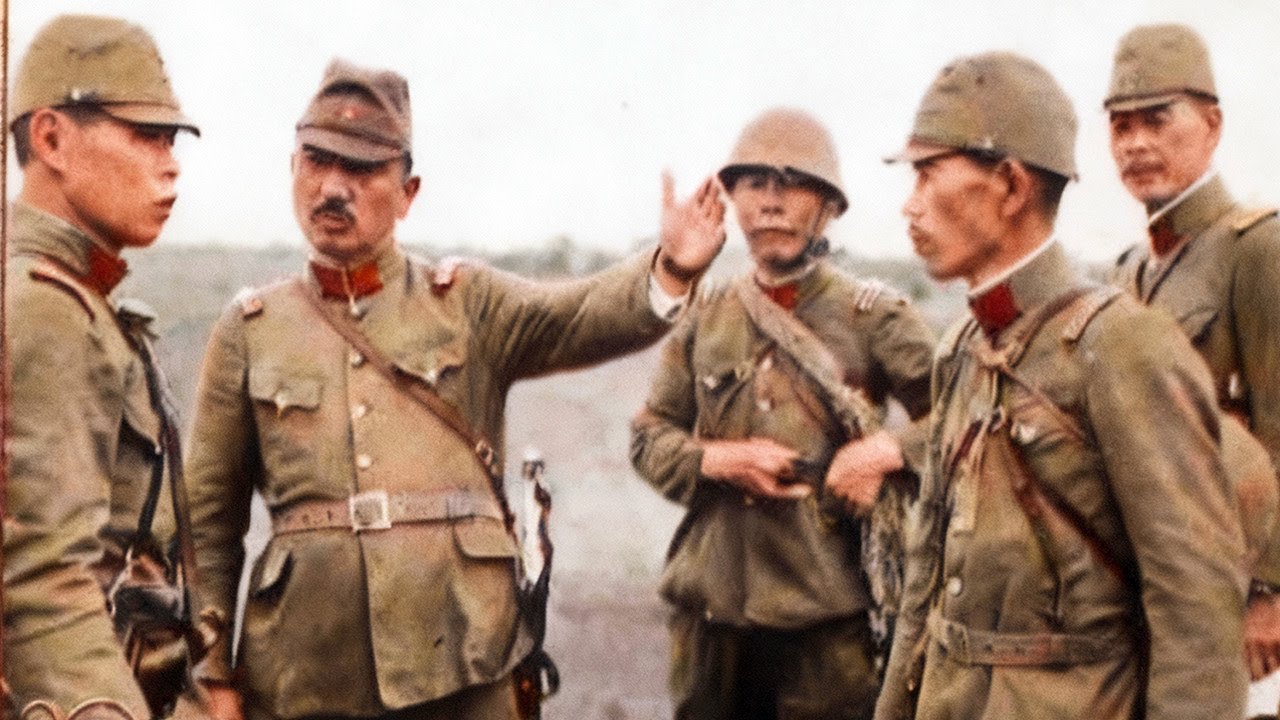
His staff estimated no more than 2 or 3,000 Americans had come ashore, probably a reconnaissance in force that could be swept aside by a single regiment. The airirstrip was strategically vital. Bombers operating from its runway could threaten Japanese shipping lanes throughout the Solomon Islands and beyond. Speed was essential. Every day the Americans remained would make them stronger and their removal more costly.
Hiakutake’s plan reflected Japanese doctrine refined through 5 years of successful campaigns. The Ichuki detachment would land first with approximately 900 men, establish a beach head, and hold until the rest of the 28th Infantry Regiment arrived with another 1,200 troops. Only then would they attack the airfield in overwhelming force using night assault tactics to minimize American advantages in artillery and air support.
The orders were explicit. Land at Tyu Point, 20 mi east of the American perimeter and wait for reinforcements before launching any major offensive. Intelligence suggested the Marines were poorly supplied after their transports had been withdrawn following the naval battle offso island. Time favored the Japanese.
Reinforcement and resupply would give them every advantage. But Achiki saw the situation differently. On the night of August 18th, as fast destroyers raced through what would become known as the slot, he stood on deck watching Guadal Canal’s jungle covered mountains emerge from the darkness.
Each of his men carried light equipment and 3 days of rations, the minimum load for a swift assault. The regiment’s heavier weapons, 70mm type 92 howitzers with ranges out to 2,800 meters, 37mm infantry guns, and the precious type 92 heavy machine guns were distributed among companies trained to use them in coordinated night attacks. These were elite troops, many of them veterans of the China campaigns, conditioned to believe that Japanese fighting spirit could overcome any defensive position.
The destroyers reached Tyu Point at 0200 hours on August 19th and Ichiki’s men came ashore in practice silence. The landing went smoothly. No enemy contact, no artillery fire, just the sound of surf and the rustle of palm frrons in the trade wind. By dawn, 917 officers and men of the Achi detachment had established a perimeter in the jungle east of the American positions.
Reconnaissance patrols moved out immediately, probing westward toward the airfield that aerial photographs showed bristling with parked aircraft and supply dumps. The first contact came sooner than expected. On the morning of August 19th, one of Ichuki’s advanced patrols ran into a Marine reconnaissance team near the beach.
The brief firefight ended with most of the Japanese patrol killed and the Marines withdrawing with captured documents that revealed the presence of a much larger enemy force. For Ichi, this contact changed everything. Surprise was blown. The Americans now knew he was coming and would use the time to strengthen their defenses.
Every hour of delay would give them more opportunity to prepare, to position artillery, to call in reinforcements from other parts of the island. Standing in a jungle clearing with his staff officers around him, Ichuki made the decision that would determine the fate of his command. The original plan called for waiting until the second echelon arrived, giving him over 2,000 men for the assault.
But that would take weeks, and the Americans would use every day to dig deeper, bring up more guns, and turn their hasty perimeter into a fortress. His intelligence still insisted the enemy numbered only a few thousand men with limited heavy weapons. Japanese doctrine emphasized that a prepared defense could be broken by determined night attack and his troops were among the finest in the Imperial Army.
Speed and shock would accomplish what caution and delay could not. The orders went out that evening. The Achi detachment would advance immediately toward the American perimeter and attack at the first opportunity. They would not wait for reinforcements, would not waste precious time on elaborate reconnaissance, would not give the enemy a single unnecessary hour to prepare.
It was the same decision Ichiki had made 5 years earlier at Marco Polo Bridge, the same philosophy that had guided him through the China campaigns, the same aggressive instinct that had been frustrated by the canceled Midway operation. Now finally he would have his chance to prove that Japanese fighting spirit properly applied could overcome any obstacle.
As his troops prepared to move out through the jungle toward Alligator Creek, Ichiki reviewed the tactical situation one final time. His men were elite, motivated, and trained in night fighting techniques that had terrorized Chinese armies. The Americans were newly arrived, probably poorly supplied, and defending an unfamiliar position.
The airfield lay just three mi west through manageable terrain. One sharp night attack would shatter their lines and recapture Henderson Field before dawn, ending the American threat to Japanese operations in the Solomons. What Ichi did not know was that 11,000 Marines waited behind the Lunga perimeter, not the few thousand his intelligence suggested.
They were supported by 75mm pack howitzers with ranges out to 9,600 yd, 105 mm guns that could reach 12,000 yd, and 37mm anti-tank weapons loaded with canister rounds designed to turn approaching infantry into casualties. Most dangerous of all, they were commanded by officers who had studied Japanese night attack tactics and prepared a defense specifically designed to channel those attacks into prepared killing zones.
The stage was set for a collision between two military philosophies, Japanese confidence in spiritual superiority and night assault tactics against American firepower and defensive preparation. Ichuki’s decision to attack immediately with 900 men instead of waiting for his full strength would test whether courage and training could overcome the brutal arithmetic of modern defensive warfare.
The answer would come in 12 hours of fighting along a narrow sandbar where 800 of his men would pay the ultimate price for their commander’s impatience. The transports had pulled out too early and Major General Alexander Vandergrift knew it. Standing on the beach at ES Red Beach on the morning of August 9th, 1942, he watched the last Allied ships disappear over the horizon, taking with them the heavy equipment, ammunition reserves, and food supplies his First Marine Division desperately needed.
Two nights earlier, Japanese cruisers had surprised the Allied fleet offs Tsavo Island in one of the most devastating naval defeats in American history, sinking four heavy cruisers, and forcing Admiral Frank Jack Fletcher to withdraw his remaining ships before they could complete the unloading. The Marines were left with 17 days of rations, limited artillery ammunition, and the growing certainty that they were now fighting alone on an island the Japanese considered vital to their Pacific Empire. The captured air strip that
would become Henderson Field stretched 3600 ft through kunai grass and coconut palms. Its coral runway still unfinished but operational enough for the aircraft that would soon make it the most important piece of real estate in the South Pacific. Around this airfield, Vandergri’s 11,000 Marines began constructing a perimeter that would have to hold against whatever the Japanese sent to reclaim it.
The western anchor sat along the Matanekao River where the fifth Marines established positions overlooking the jungle approaches from that direction. The southern and eastern sides curved through ridgeel lines and coconut groves with the crucial eastern sector anchored on Alligator Creek where H Company of the second battalion first marines began digging in with their M191701 water cooled machine guns and M1903 Springfield rifles.
Lieutenant Colonel Edwin Pollock’s second battalion first marines drew the responsibility for the eastern approaches, the most likely avenue for a Japanese counterattack from the direction of their remaining bases. His men began imp placing 37 mm M3 anti-tank guns from the first special weapons battalion at key points along Alligator Creek, citing the weapons to cover the sandbar at the creek’s mouth and the shallow fords upstream.
Each gun weighed 912 lbs and required a crew of four to six men, but could fire up to 25 rounds per minute when properly served. More importantly, the guns could switch from high explosive shells for bunkers to M2 canister rounds for attacking infantry, each canister containing 122 steel balls that spread in a deadly pattern out to 250 yards.
The 11th Marines artillery regiment positioned their 75 mm pack howitzers and 105 mm guns to provide fire support across the entire perimeter. The 75 mm M1A1 howitzers each weighing about 1,200 lb could reach targets at 9600 yd with high explosive shells weighing 14 12 lb. The heavier 105 mm M2 A1 howitzers extended that range to 12,000 yards with 33lb shells, giving Vanderggriff the ability to strike Japanese assembly areas and supply routes well beyond his infantry outposts.
Both weapons could deliver devastating concentrations on pre-registered targets, turning suspected approach routes into killing fields within minutes of a fire call. The first test of this defensive system came not from a major assault, but from American overconfidence. On August 12th, Lieutenant Colonel Frank Gutka led 25 Marines on what he believed would be a routine reconnaissance mission west of the Lunga perimeter.
Intelligence suggested that Japanese naval construction troops in the area might be willing to surrender, and Guka hoped to combine reconnaissance with a propaganda mission that would encourage enemy defections. The patrol loaded into a Higgins boat and moved west along the coast toward the Matanika River, where aerial observers had reported signs of enemy activity.
The mission went wrong almost immediately. As Gutka’s men approached the beach near Point Cruz, Japanese machine guns and rifles opened fire from concealed positions in the jungle. The Marines found themselves trapped on a narrow strip of coral sand with no cover and no way to retreat. One by one, they were picked off by accurate fire from troops who had been expecting them.
GKA himself was killed early in the fight along with his intelligence officer and most of his men. Only three Marines escaped to bring word of the disaster back to the perimeter. The loss of the Gutgra patrol sent shock waves through the first Marine Division and fundamentally changed Vondigri’s approach to operations beyond the perimeter.
The optimistic assumption that Japanese resistance was crumbling gave way to a harder reality. Every contact with the enemy would be a fight, and every patrol would need heavy weapon support and careful planning. The days of small unit reconnaissance missions based on hope rather than intelligence were over. This new caution shaped the division’s response when coast watcher reports began arriving of increased Japanese activity east of the perimeter.
Major Martin Clemens, the British district officer who had remained on Guadal Canal when the Japanese invaded, operated a radio network that tracked enemy movements throughout the island. His most trusted scout was Sergeant Major Jacob Vaoza, a former native police officer whose knowledge of the jungle and complete loyalty to the Allied cause made him invaluable for gathering intelligence on Japanese positions and intentions.
On August 19th, the same day Ichigi’s advanced patrol clashed with Marines near Tyu Point, Vandergrift ordered three companies of the fifth Marines to probe west across the Matanika River. Unlike the Guetka patrol, this mission went in with full artillery support and clear objectives, test Japanese strength in the area, familiarize Marine units with the terrain, and establish fire support procedures for future operations.
The Marines crossed the river in assault boats, established a beach head under covering fire from mortars and machine guns, then pushed inland against scattered resistance from Japanese naval troops and construction workers. The operation achieved its limited objectives without heavy casualties. But more importantly, it gave Marine commanders their first real test of coordinated fire support in jungle terrain.
Forward observers learned to adjust artillery fire through dense canopy. Infantry companies practiced calling for mortar support and radio operators worked out communication procedures that would be essential when the Japanese launched their inevitable counterattack. The lessons learned at Matanakau would prove crucial in the coming battle at Alligator Creek.
That same day brought news that would change the strategic situation on Guadal Canal. The escort carrier USS Long Island had approached close enough to launch 31 aircraft toward Henderson Field. 19 F4F Wildcat fighters and 12 SBD Dauntless dive bombers. The Wildcats could reach speeds of 331 mph at 21,000 ft and carried 650 caliber machine guns, while the Dauntless bombers had a range of,00 m and could carry up to 2400 lb of bombs.
These aircraft, which would become known as the Cactus Air Force, gave Vanderggrift his first real offensive capability beyond the range of his artillery. The arrival of American aircraft over Henderson Field marked a turning point in the campaign. Japanese ships and aircraft that had operated freely in the waters around Guadal Canal now faced fighter interception and bombing attacks.
Supply runs to Japanese forces on the island became increasingly dangerous while American reinforcements and supplies could be protected by land-based air cover. The strategic balance was shifting, but the immediate tactical situation remained precarious for the Marines dug in around the airfield. On the evening of August 20th, the tactical situation became critical when Sergeant Major Vuza staggered into the Marine perimeter with news that would save hundreds of American lives.
Earlier that day, Japanese troops had captured him while he was scouting near Tyvu Point and found a small American flag hidden in his clothing. When he refused to provide information about Marine positions and strength, his captors bound him to a tree and bayonetted him repeatedly through the chest and throat.
Left for dead, Vuza had chewed through his bindings, crawled several miles through the jungle, and reached the perimeter with a warning that hundreds of Japanese soldiers were moving toward Alligator Creek for an attack that night. Vandergrift immediately ordered H Company and the rest of Pollock’s second battalion first marines to full alert.
Unlike the overconfident patrol that had led to the Ga disaster, this time the Marines listened to their intelligence and prepared accordingly. Machine gun crews checked their water supplies and ammunition. Artillery forward observers confirmed their radio frequencies and pre-registered target coordinates, and the 37mm gun crews loaded canister rounds and cighted their weapons on the approaches across Alligator Creek.
The stage was set for the collision that Ichiki’s impatience had made inevitable. On one side of the creek, 900 Japanese soldiers prepared for a night assault they believed would shatter American resistance and recapture Henderson Field. On the other side, several thousand Marines waited in positions specifically designed to channel that assault into interlocking fields of fire that would turn courage into catastrophe.
The difference between the two forces was not just in numbers or equipment, but in philosophy. The Japanese believed in the power of spirit over steel, while the Americans had learned to trust in preparation, coordination, and the brutal efficiency of modern defensive firepower. At 1:30 in the morning on August 21st, 1942, Private Almid crouched behind his M191701 machine gun on the west bank of Alligator Creek, watching the sandbar 50 yards away through the tropical darkness.
The 22-year-old from Philadelphia had been feeding ammunition belts and adjusting water flow to the gun’s cooling jacket for 3 hours ever since Sergeant Major Vosa’s warning had put H Company on full alert. Next to him, Corporal Loy Diamond checked the gun’s traverse one final time, while Private John Rivers kept watch on their flanks with his Springfield rifle.
The machine gun weighed 103 lbs with its tripod and water jacket, but it could fire 450 rounds per minute through a barrel that stayed cool enough for sustained fire as long as the water kept circulating. Across the creek, Colonel Ichiki deployed his assault force in the Coconut Groves and Kunai Grass, arranging roughly 700 men in three waves for what he believed would be a decisive night attack.
His lead companies carried Type 999 rifles with their distinctive chrosanthemum imperial seals while heavy weapons teams positioned type 92 machine guns to provide covering fire across the water. The Japanese plan was deceptively simple. Overwhelming numbers would charge across the sandbar under covering fire, punch through the American line at its weakest point, then roll up the entire eastern sector of the perimeter before dawn.
Ichiki had used similar tactics successfully in China, where rapid night assaults had broken defensive positions that seemed impregnable in daylight. The first green flare arked over the creek at exactly 1:30, illuminating the sandbar in an eerie glow that turned the shallow water into a stage for the slaughter that followed. Approximately 100 Japanese soldiers rose from concealment and began their sprint across the exposed sand and coral, their bayonets glinting in the flare light as they shouted the traditional battlecry that had terrorized Chinese troops for 5
years. They expected to cover the 50 yards to the marine positions in seconds, relying on shock and speed to carry them through whatever resistance the Americans could offer. Instead, they ran into a wall of coordinated fire that had been planned and rehearsed for exactly this moment. The 37mm guns opened first, their crews switching from high explosive to M2 canister rounds as the Japanese closed to effective range.
Each canister contained 122 steel balls that spread in a cone pattern 6 to 8 yd wide at the impact point, turning the narrow sandbar into a beaten zone where survival was purely a matter of chance. At a firing rate of 25 rounds per minute, each gun could put over 3,000 steel balls into the killing zone every 60 seconds.
Diamond’s machine gun joined the barrage at 75 yds. Its water cooled barrel allowing sustained fire that would have been impossible with an air cooled weapon. The 30 caliber bullets, each weighing 150 grains and traveling at 2,800 ft per second, cut through the charging Japanese like a scythe through wheat.
Rivers added the precise fire of his Springfield, picking off individual targets that made it through the machine guns beaten zone while other riflemen along the line contributed their own disciplined volleys. The first assault wave disintegrated in less than 3 minutes, leaving dozens of bodies scattered across the sandbar and floating in the shallow water.
Those few Japanese who reached the West Bank found themselves isolated and outnumbered, facing Marine riflemen who had been trained to fight at close quarters with bayonets, grenades, and the brutal efficiency that came from knowing their backs were to Henderson Field. H Company sealed the penetrations with immediate counterattacks, using Browning automatic rifles and hand grenades to eliminate the handful of attackers who had made it across alive.
Ichi watched his first wave shattered and immediately ordered the second assault, convinced that American ammunition would run low and that sheer numbers would eventually overwhelm the defenders. At 3:00 in the morning, he committed 150 more men to the sandbar, this time supporting them with concentrated fire from his Type 92 machine guns and 70 mm howitzers.
The Japanese mortars and artillery attempted to suppress the marine positions, but their fire was largely ineffective against troops dug into prepared foxholes and protected by overhead cover. The second assault fared no better than the first. Diamond’s machine gun crew had learned to fire in short bursts to prevent overheating, while ammunition bearsers kept a steady supply of 250 round belts flowing to the gun position.
The barrel glowed cherry red in the darkness, and the water in the cooling jacket began to boil, sending steam rising into the humid night air. When a Japanese grenade exploded near the gun position, shrapnel tore through Schmid’s face and damaged his left eye, but he continued to feed ammunition belts and help rivers maintain their sector of fire.
The 11th Marines artillery joined the battle as the second assault developed, dropping 75mm high explosive shells on pre-registered coordinates along the east bank of the creek. Each shell weighed 14 12 lb and contained enough explosive to kill or wound every man within a 20-yard radius of the impact point.
Forward observers adjusted fire by sound and muzzle flash, walking the bombardment through areas where Japanese troops were forming up for follow-on attacks. The artillery response was immediate and devastating, proving that American fire support coordination had advanced far beyond what Japanese intelligence had predicted.
By 4 in the morning, the Cheeki’s assault force had suffered catastrophic casualties without achieving any of its objectives. The sandbar was carpeted with bodies, and the shallow water ran red in the reflected light of illumination flares. Japanese wounded called out for help in the darkness, but any movement toward the creek drew immediate rifle fire from Marine positions that had been cited to cover every approach.
The night attack doctrine that had worked so effectively against Chinese armies was proving suicidal against an enemy that had studied Japanese tactics and prepared specifically to counter them. Desperate to salvage something from the disaster, Ichuki ordered a third assault around 5 in the morning. this time directing his remaining troops into the surf to wade around the creek mouth and attack up the beach.
He calculated that the Marines would not expect an assault from the water and that his men could achieve surprise by approaching from an unexpected direction. The tactic showed tactical flexibility, but it also demonstrated how completely the Japanese colonel had misjudged both the terrain and his enemy. The Marines had anticipated exactly this move.
Machine gun positions along the beach had been cighted to cover the surf zone with interlocking fire, while the 37mm guns could traverse to engage targets in the water. As Ichiki’s men waited through chest deep water, struggling to maintain formation in the surf, they became easy targets for weapons that had been zeroed for exactly this contingency.
Canister rounds churned the shallows into foam, while machine gun fire cut down anyone who tried to reach the beach. The third assault lasted less than 20 minutes before it too collapsed in complete failure. Japanese bodies floated in the surf and lay scattered along the waterline, testimony to the lethal effectiveness of prepared defensive positions manned by troops who understood their weapons and had trained to use them as part of a coordinated system.
The human wave tactics that had terrorized Asian armies in the 1930s had met 20th century American firepower, and the result was not even close. As dawn broke over Guadal Canal on August 21st, the full scope of the disaster became apparent to both sides. The sandbar and beach approaches were littered with several hundred Japanese dead, while marine casualties had been remarkably light.
H Company had held its positions throughout the night. its machine guns and rifles integrated with artillery and anti-tank weapons into a defensive system that had functioned exactly as designed. Ichuki’s elite regiment, reduced to perhaps 200 effective men, was trapped in a shrinking perimeter east of the creek with no possibility of retreat and no hope of reinforcement.
The battle of Tenaru was not over, but its outcome was no longer in doubt. American firepower, coordination, and defensive preparation had shattered Japanese confidence in night assault tactics. What remained was the systematic destruction of Ichiki’s surviving force. A task that would require tanks, artillery, and the kind of methodical combined arms operation that would define American tactical doctrine for the rest of the Pacific War.
Dawn revealed the full extent of Ichi’s disaster to both sides of Alligator Creek. The sandbar that had been the focus of three failed night assaults was now carpeted with Japanese dead. Their bodies sprawled in the grotesque positions that violent death imposes. Marine observers counted over 200 corpses visible from their foxholes, while many more floated in the surf or lay hidden in the kunai grass on the eastern bank.
The smell of cordite and blood hung heavy in the humid morning air, mixed with the acrid smoke from machine gun barrels that had fired thousands of rounds during the night. Lieutenant Colonel Edwin Pollock emerged from his command post as the tropical sun climbed above the coconut palms, surveying a battlefield that exceeded his most optimistic expectations.
His second battalion, first marines, had held their positions throughout 12 hours of continuous combat, breaking three determined Japanese assaults while suffering minimal casualties. But intelligence reports suggested that several hundred enemy soldiers remained alive east of the creek, and Pollock knew that allowing them to regroup would only invite another night attack.
The time had come to finish what Ichiki had started. Major General Vanderggrift reached the same conclusion when he arrived at the front lines shortly after sunrise. Unlike the cautious defensive fighting that had characterized the campaign so far, the situation at Alligator Creek offered an opportunity to destroy an entire Japanese regiment in a single coordinated attack.
Rather than wait passively for another night assault, Vandergrift ordered an immediate counteroffensive that would demonstrate the full power of American combined arms warfare. The plan called for a classic double envelopment. Lieutenant Colonel Leonard Creswell’s First Battalion, First Marines would cross upstream and sweep down from the south while Pollock’s men advanced directly across the creek, supported by tanks from the First Tank Battalion.
The M3 Stewart light tanks that would spearhead the assault represented American industrial might applied to Pacific warfare. Each tank weighed 13 1/2 tons and could reach speeds of 36 mph on roads, though the coral sand and coconut groves around Alligator Creek would limit them to walking pace. The Steuart’s main armament was a 37mm gun identical to the towed anti-tank weapons that had proven so effective during the night battle, but the tank-mounted version could fire on the move while protected by up to 51 mm of frontal
armor. More importantly, each Steuart carried up to five 30 caliber machine guns, turning it into a mobile fortress that could deliver sustained fire while advancing through terrain that would stop infantry. Captain Leo Casease led five Stearts from a company first tank battalion across the sandbar at 7:30 in the morning.
Their tracks grinding over coral sand still dark with Japanese blood. The tanks moved in line a breast at 3 mph. Their crews buttoned up inside steel compartments that transformed the humid tropical morning into a sweltering oven. Each tank commander peered through vision blocks that limited his view to narrow slits while drivers navigated by periscope in the shouted directions of their commanders.
The noise was deafening. Engine roar, track clatter, and the constant rattle of machine gun fire as the tanks engaged targets of opportunity. The Japanese had not been idle during the dawn hours. Pichiki’s surviving officers had organized their remaining troops into defensive positions among the coconut palms. Using the massive tree trunks as cover and concealment, they deployed their few remaining heavy weapons.
Type 92 machine guns, 37mm infantry guns, and improvised anti-tank charges in positions that offered some hope of stopping or damaging the advancing stewards. The Japanese had learned to respect American armor during their campaigns in China and the Philippines, but they had never faced tanks supported by coordinated infantry and artillery and terrain that favored the attackers.
The first Stewart to cross the sandbar drew concentrated fire from Japanese positions hidden in the grove. 37 mm shells and magnetic mines damaged its tracks and vision blocks, forcing the crew to fight, buttoned up and nearly blind. But American tank doctrine called for mutual support, and the damage Stewart’s wingman immediately moved to cover it with suppressive fire.
The tank’s 30 caliber machine guns rad. The Japanese positions with long bursts while high explosive shells from its main gun smashed through palm trunks and detonated among the defenders. Pollock’s infantry followed closely behind the tanks, using the armored vehicles as moving shields while they cleared Japanese positions one by one.
The Marines had learned the importance of tank infantry cooperation during their training in the States, but this was their first opportunity to apply those lessons under combat conditions. Rifle squads moved in bounds from tree to tree, covering each other with Browning automatic rifles and grenades, while the tanks provided heavy fire support.
When Japanese soldiers attempted to close with the Stearts using satchel charges and magnetic mines, Marine riflemen picked them off before they could reach their targets. Meanwhile, Creswell’s First Battalion First Marines began their flanking movement upstream, crossing Alligator Creek at a shallow ford 200 yd south of the sandbar.
The battalion moved through dense jungle and coconut groves at the pace of men carrying full combat loads in tropical heat. But their mission was crucial to the success of the entire operation. By swinging wide to the east and then turning north toward the beach, they would cut off any Japanese attempt to retreat and complete the encirclement that would turn tactical victory into strategic annihilation.
The 11th Marines Artillery Regiment provided continuous fire support for both advancing battalions, dropping 75 mm and 105 mm shells on suspected Japanese positions throughout the Grove. Forward observers moved with the lead companies, adjusting fire by radio, and directing the guns onto targets that threatened the advance.
The artillery was particularly effective against Japanese heavy weapons positions whose muzzle flashes revealed their locations to observers equipped with binoculars and accurate maps. As the morning progressed, the coordinated American attack began to compress Ichiki’s survivors into an evershrinking pocket near the beach.
Japanese resistance remained fierce but increasingly desperate with individual soldiers and small groups fighting to the death rather than surrendering. The Americans had learned not to expect quarter from an enemy that preferred death to dishonor, and they responded with the systematic brutality that jungle warfare demanded. Flamethrowers cleared bunkers that resisted conventional weapons, while tanks and artillery reduced defensive positions to smoking rubble.
The Cactus Air Force joined the battle around noon when F4F Wildcats and SBD Dauntless dive bombers from Henderson Field began strafing and bombing Japanese positions along the beach. The aircraft flew attack runs at altitudes of just a few hundred ft. Their pilots able to see individual enemy soldiers and vehicles with remarkable clarity.
The Wildcats 650 caliber machine guns and the dauntless bombers. Thousand-p bombs added another dimension to the American firepower advantage, proving that air support could be decisive even in jungle terrain when properly coordinated with ground forces. By mid-afternoon, Ichiki’s force had been reduced to fewer than 100 men trapped in a coconut grove less than 200 yd from the beach.
The Japanese colonel himself was among the defenders, though accounts differ as to whether he died fighting or committed suicide when the situation became hopeless. What is certain is that he never lived to explain his decision to attack immediately rather than waiting for reinforcements, taking that fateful choice with him to a grave somewhere in the coral sand of Guadal Canal.
The final assault began at 3:00 in the afternoon when American tanks, artillery, and aircraft concentrated their fire on the last pocket of Japanese resistance. The Coconut Grove became a killing field where survival was impossible, and escape was blocked by Creswell’s men along the beach. One by one, the remaining Japanese positions were overrun or destroyed, their defenders dying at their weapons rather than attempting to surrender.
The sound of gunfire gradually diminished to isolated rifle shots, then to silence broken only by the crash of surf and the distant rumble of aircraft returning to Henderson Field. When the shooting stopped, American officers began the grim task of counting bodies and assessing the results of their first major offensive action on Guadal Canal.
Of the approximately 900 men who had landed with the Cheeki at Tyu Point 3 days earlier, only 15 were taken prisoner. The rest, roughly 774 confirmed dead, lay scattered across the battlefield from the Sandbar to the Coconut Grove, testimony to the lethality of modern combined arms warfare when properly applied. Marine casualties for the entire battle totaled 34 killed and 75 wounded, a casualty exchange ratio that demonstrated the decisive advantage of defensive preparation followed by coordinated offensive action. The battle of Tenneroo
was over, but its implications would resonate throughout the Pacific War. American forces had proven that Japanese night attack tactics could be defeated by superior firepower and coordination. While the Japanese had learned that their traditional reliance on fighting spirit was no match for integrated air, armor, artillery, and infantry working together.
Most importantly, Henderson Field remained in American hands, its runway busy with the aircraft that would make Japanese resupply increasingly costly and dangerous. Colonel Ichiki’s impatience had cost him his regiment and his life, but it had also given the Americans their first clear tactical victory in the campaign that would ultimately determine the fate of the Pacific. The smell lingered for days.
Marines assigned to burial details worked in shifts through the tropical heat of late August, dragging Japanese. Bodies from the coconut grove to mass graves dug in the coral sand behind the front lines. The work was grim and necessary, but it left an indelible mark on men who had joined the core to fight, not to dispose of the consequences of fighting.
Private Al- Schmid, his left eye bandaged and his face still swollen from shrapnel wounds, helped carry stretchers when he wasn’t receiving treatment at the aid station. The machine gunner, who had helped kill over 200 attackers, now found himself face to face with individual victims. Young Japanese soldiers who looked remarkably similar to the American farm boys and city kids who made up H Company.
The weapons and equipment recovered from the battlefield told their own story about Japanese expectations and American reality. Marines examining Type 99 rifles noted their excellent craftsmanship and the Imperial chrysanthemum seals that marked them as elite weapons, but they also observed that many of the dead carried full ammunition loads and very little food.
This was an assault force, not an occupation army equipped for a quick strike rather than sustained operations. Captured documents revealed the extent of Japanese miscalculation, intelligence estimates that placed American strength at 2 to 3,000 men, tactical plans based on overwhelming a small reconnaissance force, and operational assumptions that ignored the artillery and air support that had turned the battle into a systematic slaughter.
At Imperial General Headquarters in Tokyo and the 17th Army Command post in Rabal, news of the Ichiki detachment’s annihilation was initially dismissed as enemy propaganda. The idea that an entire elite regiment could be destroyed in a single night seemed impossible to officers who had spent 5 years watching Japanese forces sweep across Asia and the Pacific with seemingly unstoppable momentum.
When the truth became undeniable, reactions split along predictable lines. Some staff officers blamed Ichuki for disobeying orders to wait for reinforcements, portraying him as a reckless commander who had sacrificed his men for personal glory. Others argued that he had been placed in an impossible position by intelligence failures and unrealistic expectations from higher command.
The debate over responsibility reflected deeper tensions within the Japanese military system. Ichiki represented a generation of officers who had learned their trade during the China campaigns where aggressive action and fighting spirit had consistently overcome defensive positions and numerical disadvantages.
These men had internalized the lessons of Shanghai, Nank King, and a dozen other victories where rapid assault had shattered enemy resistance before it could organize effectively. The idea that American Marines could absorb and defeat a coordinated night attack by elite Japanese troops challenged fundamental assumptions about warfare that had been validated by years of success.
General Kiyotake Kawaguchi, who would lead the next major Japanese assault on Henderson Field, studied reports from Tenneroo with the professional interest of a commander who knew his turn was coming. Kawaguchi commanded the 35th Brigade, approximately 6,000 men who would land on Guadal Canal in early September with orders to accomplish what Ichi had failed to do.
Unlike his predecessor, Kawaguchi recognized that American strength had been badly underestimated and that frontal assault across open ground was tactical suicide. His plan called for a complex night attack through the jungle south of Henderson Field, striking at what he believed was a weak point in the American perimeter while avoiding the killing fields that had destroyed the Ichuki detachment.
The attack that became known as the Battle of Bloody Ridge began on September 13th and lasted 3 days, ending with another devastating Japanese defeat. Kawaguchi’s men fought with the same courage and determination that had characterized Ichiki’s assault, but they faced the same fundamental problem, American firepower and defensive coordination that turned individual bravery into collective catastrophe.
The 35th Brigade suffered over 2,000 casualties while inflicting fewer than 200 on the defenders, proving that Teneroo had been a preview rather than an aberration. For the Marines who had survived the night battle at Alligator Creek, the victory brought both confidence and a sobering awareness of what the war would demand.
H Company’s machine gun sections had functioned exactly as trained, proving that disciplined fire control and proper tactics could multiply the effectiveness of individual weapons. The 37mm guns had found their Pacific war niche as anti-personnel weapons. While the coordination between infantry, armor, artillery, and air support had demonstrated the potential of American combined arms doctrine when properly applied.
Al Schmid’s story became emblematic of the broader transformation taking place within the first marine division. The young machine gunner from Philadelphia was evacuated to a Navy hospital ship on August 23rd. his left eye destroyed and his right eye badly damaged by the grenade blast that had nearly killed him. Doctors initially believed he would be permanently blind, but gradual treatment restored partial sight to his remaining eye.
The Navy Cross citation that accompanied his medal described his actions in the clinical language of military bureaucracy, but it could not capture the human reality of three Marines holding a single gun position against overwhelming odds. The book and film that would later immortalize Schmid’s story reflected American needs as much as battlefield reality.
Al Schmid Marine by Roger Butterfield in the subsequent movie Pride of the Marines starring John Garfield transformed a specific tactical action into a symbol of democratic courage confronting fascist aggression. Hollywood’s version emphasized individual heroism and personal sacrifice while minimizing the systematic nature of the American victory.
The real lesson of Teneroo was not that individual Marines were braver than individual Japanese, but that American doctrine, equipment, and coordination had proven superior to Japanese tactics that depended on shock and fighting spirit. The technical lessons learned at Teneroo influenced American tactics throughout the Pacific War.
The M3 37mm gun, already obsolete as an anti-tank weapon in Europe, found new life in the Pacific as an infantry support weapon loaded with canister rounds. Tank infantry cooperation procedures developed during the daylight counterattack became standard doctrine for marine and army units fighting in jungle terrain. Artillery forward observer techniques tested under combat conditions at Alligator Creek were refined and taught to new units preparing for subsequent amphibious assaults.
Most importantly, Tenneroo marked the beginning of American tactical confidence in the Pacific. For 18 months after Pearl Harbor, Japanese forces had seemed unstoppable, achieving victory after victory through superior training, equipment, and leadership. The night battle at Alligator Creek proved that Japanese tactics could be studied, anticipated, and defeated by American forces that understood their own advantages and used them systematically.
The psychological impact was as important as the tactical lessons, giving Marine and Army commanders confidence that they could match and defeat their Japanese counterparts in sustained ground combat. The strategic implications extended far beyond Guadal Canal. Henderson Field remained operational.
its runway busy with the aircraft that would make Japanese resupply increasingly costly and dangerous. The Cactus Air Force grew stronger each week, adding new fighters and bombers that extended American air superiority throughout the southern Solomons. Japanese attempts to retake the airfield became increasingly desperate and expensive, bleeding away trained air crew and experienced ground troops that could not be replaced.
Colonel Ichuki’s grave somewhere in the coral sand near Alligator Creek became an unmarked monument to the dangers of overconfidence and the price of tactical inflexibility. Japanese military culture made it impossible to admit that fighting spirit alone was insufficient against superior firepower and coordination. But the battlefield results spoke for themselves.
The night attack tactics that had dominated Asian warfare for a decade were obsolete when applied against American defensive systems designed specifically to counter them. 60 years later, military historians would identify the Battle of Tenneroo as the first clear American tactical victory in the Pacific War. The moment when Japanese invincibility was revealed as mythology rather than military fact.
The casualty figures told the story with brutal clarity. 900 Japanese committed, 774 killed, 15 captured. 34 Marines killed, 75 wounded. The exchange ratio of over 20 to1 in killed represented the decisive advantage of preparation over improvisation, coordination over individual courage, and patient defensive planning over aggressive offensive action.
On Guadal Canal at Alligator Creek, firepower backed by patience beat courage backed by wishful thinking. Colonel Aiki was told to wait for reinforcements. He didn’t. 800 of his men paid for that choice in one night on one sandbar in a battle that changed the course of the Pacific War and proved that even the most determined assault could not overcome the brutal arithmetic of modern defensive warfare.
News
Admiral Shibazaki Boasted “It Will Take 100 Years to Capture Tarawa” — US Marines Did It In 76 Hours
At 13:30 hours on November 23rd, 1943, Colonel David Shupe stood on a two-mile strip of coral called Betio,…
Japanese Troops Were Terrified When U.S. Marines Cleared Trenches Without Letting Go Of The Trigger
On the morning of August 17th, 1942, at 0917, Sergeant Clyde Thomasson crouched behind a palm tree on Makan Island,…
Japanese Soldiers Were Terrified When .50 Caliber Machine Guns Penetrated Their Concrete Bunkers
On the morning of May 14th, 1945, at 0630 hours, Corporal Lewis Ha crouched behind a coral outcrop on Okinawa’s…
General Hyakutake Ignored The “No Supplies” Warning — And Marched 3,000 Men Into The Jungle To Die
On the morning of December 23rd, 1942, at 0800 hours, Lieutenant General Harukichi Hiakutake sat in his command bunker on…
Japanese Soldiers Were Terrified When U.S. Marines Turned Anti-Tank Guns Into Giant Shotguns
On the morning of August 21st, 1942, at 3:07 a.m., Private First Class Frank Pomroy crouched behind a 37 millimeter…
Waiter praised Redford for WRONG MOVIE at Grand Hotel — his response was warmed hearth
Jean Mark had been working at the Gran Hotel daper for six years. He’d served princes, presidents, and movie stars….
End of content
No more pages to load