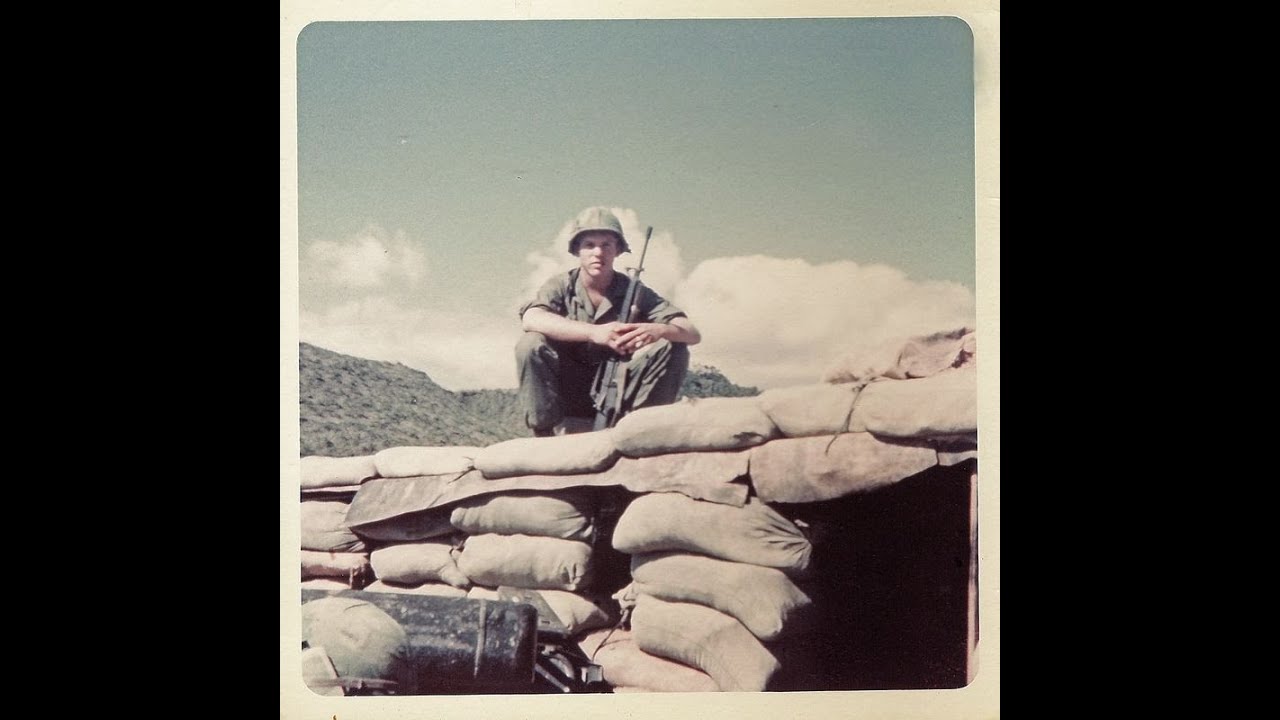
firing had gotten so intense it was just breaking rice straws off in front of front of our faces. You could hear the bullets popping in the air all around you. [music] [music] [music] >> [music] [music] [music] >> I’m from Yokum, Texas. Originally, born and raised there. Graduated from Yokum High School in 1966.
After uh I got out of service, I went to Baytown where I’ve been ever since. Growing up, my family was in the trucking business. Uh my father and my uncle were partners in the trucking business. And uh uh at the time I got drafted, we they were running 12 trucks and I was a truck driver, quote, mechanic, uh oil drainer, flat fixer, whatever.
Uh during the summers I would be driving a truck. Sometimes during a school year uh if we had drivers sick or whatever then I would drive. I started driving for my dad uh when I uh by myself in an 18-wheeler for when I was uh age 15 and uh I drove until I till I got drafted into the army. I grew up on 300 acres.
Uh it was rough in that we all we all worked uh we had to work and we worked hard. Uh we planted our plant and g planted and grew our own food rather. We we raised our own cattle. Uh we raised our own hogs, chickens, uh every everything you can imagine that would have to do with a farm. But yet I had 300 acres to run around with and uh and I hunted and fished every second that I had.
Don, you were drafted into the military. How did you find out? And what was your reaction to being drafted? >> Drafted? I was driving a truck and uh uh I remember my truck had broken down in uh uh Brennham, Texas, and I called home to have someone come and repair the truck. And at that time, my uncle told me, he said, “Well, you really don’t need to worry about it.
” He said, “You’re in the army now.” He said, “Your draft notice just came in the mail.” So that made me feel great. and uh instant butterflies and uh like oh no, here we go. I was drafted drafted October 1966. I took basic training in Fort Hood, Texas. Uh a very unlikely place to take basic training if you know you’re going to Vietnam, but that’s where we took it.
Uh our training in Fort Hood was pretty unique. Uh they knew that we were going to Vietnam uh the minute we got to Fort Hood. They never said that to us at first, but they trained us hard. Uh we we were uh in pretty good shape by the time we got out of basic training. Uh I can honestly say that it was a lot different than what I understand that the Army or the Marines or other branches of service are like now.
Uh now they can’t lay a hand on you. But I remember getting hit by a drill sergeant. I remember a guy getting kicked in the rear pretty hard by by one of his drill sergeants and the other platoon and uh they were pretty rough. >> What were some humorous events that happened during training? >> There’s always something uh some good and some bad in every situation and uh uh I remember we had a guy named Jack Hutton that uh was really overweight.
Uh he uh he was a big red-headed guy from Skenctity, New York. He was way overweight. And in order to get to eat, you had to do 10 pull-ups or 20 push-ups or you didn’t eat. And I remember it seems like Jack went about three or four weeks without eating because he couldn’t do one of any of them.
And finally after so missing you know so many meals they had let him come in and eat and finally he got where he could do one or two of each one of the exercises and uh pretty soon he could do five or six and by the time basic was over he had lost down to about 180 pounds from about 300. He felt great, looked great and was really proud of himself and we were all proud of him.
And that’s one of the things that I remember uh that that really meant a lot to us and and we hurt for him because we knew that he had really suffered because uh I’ve seen him be so hungry he would cry. Now they can’t do that to you in these days, but they did it to us then. Uh they wanted us in shape.
They knew we were going to war. Had a guy named Wall Raven from uh I think it was Marietta, Georgia. It was it was in Georgia and he was uh he was a good kid. And Corpal McDorman McDormant loved to mess with him and he just loved the way wall raven sound because uh you know the guys from Georgia and Texas all had kind of a draw and uh Corpal McDor would say wall raven.
He’d say here corporal a couple of seconds later he’d say wall raven here corporal wall raven here corporal. And uh he did it so often that when you when you came into the barracks at night, if he was asleep, you could go wall Raven. And in his sound asleep, he would go here, corporal. And so everybody took advantage of that. And the poor guy, everybody would would do that all night long.
If they were on fire watch, they’d go when they change change watches with another firewatch before they started their shift, they’d go wall raven here, carpal. And it was pretty funny. In basic, they guaranteed us four hours of sleep out of 24. But what they didn’t tell us is they could give it to us in 30 minute increments.
And a lot of times that’s just what they did. They would uh wake us up 30 minutes and have a surprise inspection or they would make us take our foot lockers out in the street. Uh sometimes we would have to fall out in our underwear carrying our foot lockers and they’d make us empty them out and then pick it back up, bring it back in the barracks, get it rearranged and have another inspection.
And that went on for weeks and it got to where we were just uh kind of numb from exhaustion and so forth. But uh there were there came a certain point where they started building us back up. So it was pretty interesting, pretty tough. >> When were you assigned to Alpha Company, first of the six infantry? >> I went to A company, first of the six.
After AIT, I took basic and C company, first of the 46. Stayed with with them through uh AIT. We formed uh first of the six infantry which became uh one of the battalions in the 198th infantry brigade which was formed in Fort Hood for the purpose of going to Vietnam and that must have been let’s see we took basic in October we took uh AIT probably in uh January they about got the probably around the first of January or middle of January and then sometimes March, I think we went over to uh to the first of the six and formed the
gunfighters. We developed a pretty unique bond with each other. Uh when we were in training, we spent a lot of time with each other. Um we were in the field working five days a week running uh playing army games, uh doing mock attacks and so forth. And you become real close whenever you live in a foxhole with somebody five days a week, uh, week in and week out.
U, you eat together, you use a bathroom together, you suffer together, you get tired together, you stink together when you’re in a foxhole and you haven’t had a bath in three or four days, and and you fight together. I mean, I’ve seen some pretty pretty hefty fights, but it’s just like uh having three or four boys in a family.
you know, they’re going to fight, but yet if somebody else messed with you, they were in trouble. So, you you really become a real close family in a situation like we had. >> Tell us what it was like receiving orders for Vietnam. >> When we found out that we were going to Vietnam, it was not really a shock and not really a surprise, but yet you’re never ready to hear that you’re fixing to be deployed to a to a war zone.
And they I remember the first sergeant came out and he said, “I regret to inform you that you will be deployed to points unknown in a uh southeastern Asian country in Southeast Asia.” And of course, you know, that’s like saying uh uh you’re going to South Texas to the biggest city in South Texas, but I can’t tell you the name.
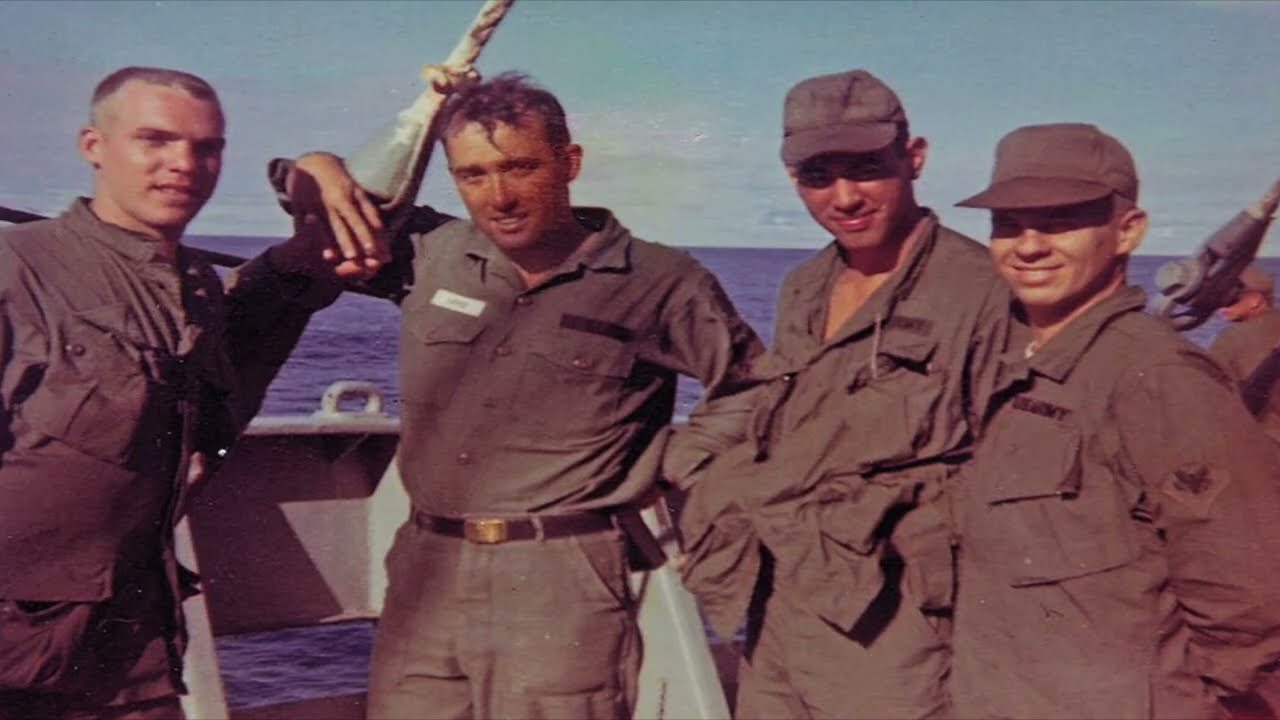
and uh you know we we knew where we were going even though he didn’t tell us exactly you know we only prayed we were going to Korea but we knew better. So it it was quite a shock. Uh most of us uh accepted it. Most of us when we got drafted knew that we were headed for Vietnam. And back then and uh I know that there’s still people like this but most of us were raised in this country where if a country called you you answered the call and and you did it to the best of your ability.
The family was kind of like like the kids they raised. Uh my stepdad had been in the in the military. He had been in Fort Hood during the Korean War training troops and then he stayed in the reserves. So he had raised me to uh to accept it when it came my turn to serve. And my mother understood that also even though it worried her and it scared her.
I think deep down in her heart she was proud to know that her son would go do what he had to do. And that’s kind of the way that they grew up being themselves. And my brothers and sisters uh my I remember my two sisters were were proud but yet concerned. and my two little brothers could have car carried less because they were a lot younger than me.
>> I know your unit traveled to Vietnam by ship. What was that experience like? >> You know, most most people that went to Vietnam went as uh uh replacements and would go over on an airplane. They they would send a group of six or eight or 10 or 20 or whatever and they would go into some some unit as replacements.
But because we were a newly formed brigade uh and they were reactivating the American division which is the old 23rd division almost all of us went on two ships the USS Upure which we call USS Upchuck and the uh USS garden. I think the first of the 52nd was on the USS Gordon and first of the six and part of the first 46 were on the upure.
So we we had a long boat ride. Well, the upure was a typical troop carrier. It was hot. It was crowded. Uh the bunks were all hung one below another. U and uh they were real close together. Uh, I thought the bunks were great because you were always kind of swaying like being in a hammock. Some of the guys just couldn’t stand the constant motion and it made them sick.
So, I started off on the bottom bunk. I never got sick, but everybody above me did. So, I ended up on the top bunk in my particular row. And uh I all I remember is down in the in our uh compartment it smelled like uh vomit because everybody there was sick. There was three or four of us that didn’t get sick.
And so we were on mop te mop detail constantly cleaning up vomit. And uh one of the things that I remember about that that just tickles me to death. And I don’t know why I thought it was funny, but it but it was. We were watching a movie one night and I think it the movie was Texas Across a River, which is really a hilarious movie.
And we were sitting in this room. It was real crowded. And we would sit on the floor, spread our legs, and then another guy would sit between our legs and then another one between his legs. And right out in the middle of this this large group of guys, somebody threw up. And it was a chain reaction.
And pretty soon everybody was slipping and sliding in the vomit and and they were just falling all over each other and people trying to get up and and everybody throwing up and I was kind of on the outer edges and it just was the funniest thing I had ever seen and I really enjoyed it. >> What were your thoughts about arriving in Vietnam? >> You know, when we arrived in Vietnam, it was a pretty scary situation.
We we pulled up into Denyang Harbor and it hit us all of a sudden, you know, we were out on the decks and everything and it just all of a sudden hit us, hey, we’re in a we’re in a war zone and we’re fixing to be fighting and uh it was a pretty lonesome. I had just gotten married before I went over there and all of a sudden I was sick to my stomach because I was scared, lonesome, homesick, in love, and in the wrong place.
When when we disembarked the ship, we thought that we would get off the ship fighting. Well, nothing could have been farther from the truth, but we landed in Denine Harbor. They loaded us up on LSTs and moved us down south a little further south to Chili where we came out of the inside of the the LST which was filled with rust and and it was filthy. It was hot.
Uh we changed clothes to have our good fatigues on and we thought we might get out fighting or at least shooting or you know possibly be under attack. But when they opened the ramp, there was a uh the US Army band sit standing there on the on the dock. General West Morland met us there on the on the ramp.
And uh so we came out uh on a parade with band play. And what a surprise. >> What were your first assignments after you arrived in Vietnam? When we landed in Vietnam, uh our first assignment was actually about a week of um uh refreshing refreshing u courses and uh training courses on mines and booby traps uh that we took right there in Chili.
And then they loaded us on trucks and moved us down south of Chili to Duck Fo and we uh landed on a on a base camp in Duck Foe and they divided us up and our first assignment was bridge security and they sent us uh parts of the platoon to several different bridges and that’s what we did the first week or so on bridges.
We thought we were in good shape when we went to uh when we got through with our training at Fort Hood. We thought we were just about as good a shape as we could get because all we did was uh run up and down the hills in Fort Hood. And I carried a 90 miller recoilless rifle which was heavy. And so I thought, well, you can’t get in much better shape than I’m in I’m in.
But when we got to Vietnam and we didn’t get any sleep, all of a sudden we’re carrying live ammunition. were carrying food on us and everything and the the weight that we carried would vary from 75 to 100 pounds depending on what all you had to take and how much food you had to take if depending on how long your mission was or how much ammunition you wanted to carry.
And I remember about the probably the end of the first week, I thought I would die from exhaustion. I literally felt like my system couldn’t handle anymore. Then all of a sudden one day I woke up and uh after a couple hours sleep and I actually felt pretty good and that’s when I knew that I was going to probably make it if somebody didn’t shoot.
The monsoons uh over there were miserable. Uh I remember the first operation we went out on lasted about a week and again we weren’t in very good shape like we thought we were. So everybody took the poncho when it’s rolled up. that only weighs a couple of pounds. But uh after that week, we thought, man, we’re not going to take anything that we don’t need because it’s hot over here.
So, we all left our ponchos back in the rear when we went on our next assignment. And the second day is when the monsoons hit. We didn’t know they were going to come, but we were out in the jungle for almost 30 days without a poncho. And that was an experience that we never forgot. And from that point on, we never left our ponchos back in the in the rear area.
Uh one time we went three and a half days without eating. Uh simply because it was uh we were up in some mountains or down in some valleys and the uh monsoons had set in and the fog was heavy and you couldn’t see the mountain tops. So the helicopters couldn’t get in to resupply us.
We went about three and a half days without eating. And whenever you weigh 150 pounds and you’re carrying a 100 pounds of weight on you and you’re not eating anything, there’s not much for your body to work on. And we were we were desperate. We finally crawled on top, climbed up a mountain and got on top of it where the helicopters could find us.
And they brought a hot meal out to us. And we thought that we would be able to eat two or three steaks. And everybody was complaining because they gave us a little bitty piece of steak and one spoonful of English peas and one spoonful of mashed potatoes with gravy. And we were all hollering at them, you know, we were starving. And they they told us, “If you can eat all that, you can have more all you want, but eat that first.
” And hardly anybody could finish that plate because our stomachs had shrunk up so much. >> You said the company was a tight-knit unit. Tell us about the leadership. Our leadership in a company was some of the best I believe that that existed in Vietnam. We had a captain that was tough. He was a good guy. He was fair. He believed in men being in shape.
He had a purpose. He somehow managed to uh keep our morale up better than any company over there. And what he did uh before we left is he rounded out his company with uh the best possible cadery he could find. And he went around Fort Hood locating people that he had heard about or that he had read about or whatever that had already been to Vietnam and was willing to go back.
So he sent us back with platoon sergeants and some squad leaders that had experience in combat. And so I believe that we had one of the best uh uh managed and best commanded companies in Vietnam. And Captain Brennan named our company the Gunfighters before we ever left Fort Hood. And we actually uh earned a pretty good reputation in Vietnam.
>> Sergeant Bartley was highly respected by the men, including all the officers. He served as your platoon sergeant. What do you remember about him? Sergeant Bartley was was one of the best leaders, non-commissioned officer leaders that we had. He was a uh Sergeant E5 when we left Fort Hood, but he had come to us from the first cal where he had just spent a year in Vietnam and he had been wounded and so forth.
And uh so then he decided he’d go back with us and he had met Captain Brennan somewhere and and Captain Brennan decided to uh ask him to come back with us and he accepted and he was probably the the ultimate soldier. He looked like a soldier. He acted like a soldier. He wasn’t particularly what you’d call gunhole. It’s just his job and his mission was to kill the enemy.
And he did it very methodically and he did it very business-like. He didn’t believe in molesting bodies once they were dead. He didn’t believe in harassing unnecessarily the people. He believed that if if they were enemy and you knew they were enemy, kill your enemy and leave him alone. Get get his belongings for intelligence purpose and leave leave the body.
Uh he was he was so uh in tune with being in a war zone or being in the woods or in the jungle. I always tell people he’s the only man I ever knew that went through the monsoons and never got wet. And and he was just a unique person. And Sergeant Bartley, had he not been there with us, I believe we would have lost a lot more men. He and Sergeant Burks were extraordinarily good and and just great leaders.
What were your first firefights like? >> When we first got to Vietnam, like I said, we went on bridge security and we had our first little fight there on the bridges. Uh they attacked us at night. One night they came through the water and started shooting at us and uh that was the seventh night we were in Vietnam.
And that night my squad leader got killed and uh of course that that put the fear in us. Uh that’s when we realized that we were truly in a war zone. And I think every one of us without doubt probably were thinking to themselves, I want to go home now. And it was a shock to lose one of our guys. And uh I thought it was pretty pathetic that it had to be my squad leader.
And on the seventh day we were there. And uh we really didn’t get into a lot of heavy firefights the first couple of months we were there. We got sniped at a lot. Uh couple of times we got pinned down by several snipers and that’s scary because you don’t know where it’s coming from.
Uh I remember one particular sniper was had me and Martinez uh down in this rice patty and he kept shooting at us and we could hear his uh weapon operating but we couldn’t find him. He was in the sugar cane and he kept shooting and he would miss us by a foot or two and finally we just started laughing. Every time he’d fire, he’d miss us a little bit.
And it and it dawned on me, we must be hysterical. We’re laying out here with some fool shooting at us. And we’re laying here laughing. And so I told Martinez, I said, “Man, let’s get out of here.” So we jumped up and ran. But we didn’t get into a lot of firefights. It started increasing and elevating as we got closer to the Ted offensive.
On February the 8th, 1968, the gunfighters were changed forever when the company was overrun south of Daang at the village of Lo Jiang. Would you share your memories about the day leading up to the battle and how the battle unfolded from your perspective? We had come in out of the field off of a a fairly long three or four week operation out in the jungle and we thought we were going to get two or three day standout to be able to shower and clean up and clean weapons and just lay around, play cards and relax and eat
hot food and just have a pretty good time. And we had uh I had gotten a shower and a bunch of guys got had gotten a shower and I went and got clean clothes before I did anything else. But about half the company hadn’t made it to the showers yet. And uh all of a sudden the the word came down that we were fixing to leave again that everybody had to go get fresh ammo and uh get ready to get their field gear ready to go.
And we had like 45 minutes to an hour to to get everything together to uh meet on the helil helilipad for departure to areas uh unknown to us. So, we went down to the helilipad and I we sat down there about uh seemed like several hours and I remember when we were sitting, you know, when you’re sitting on the helilipad waiting for the chopper to come in to pick you up, you get pretty bored.
And I remember Turner was sitting there, Philip Turner, he was my machine gunner and he had a green one of those locust type grasshoppers on his fatigues and he said, “Uh, I’m going to give this thing 10 seconds to get off of my leg or I’m going to eat it.” and he started we all started counting down.
So when he had zero he just picked him up and put him in his mouth and started crunching and so uh we finally the chopper got there that they loaded the whole company up on a Chernook and we still didn’t know where we were going. We just knew we were going north and there were so many things going on at that time that any place we went was probably going to be bad.
We the rumor got out that we were going to Kesan to help relieve the Marines up there. They had been under siege for several like like a couple of months already and they were taking a beating. So we uh went on the uh Chinook and it seemed like we flew for hours and hours and I’m sure it was a couple hours and we landed in Daang south of Daang at an old Marine base camp and uh so they told us to go ahead and set up for the evening.
It was just before dark, so everybody started preparing their evening meal and kind of relaxing and everything. And then we got an order for all squad leaders and team leaders to meet at the company. We went up there and we got the shocking news that we would be moving out that night and we would be walking several miles in the night, which is something a big unit hardly ever does is move at night.
We left this old Marine base camp and we started walking down this railroad track and it was kind of a high BM and uh the track itself had been torn out but you could still tell that it was a railroad track. Someone hadn’t told the Orbans, the uh Army of the Republic of Vietnam, the South Vietnamese soldiers that we were coming.
So they opened up on us with a 50 caliber 50 caliber machine gun and uh Sergeant Burks uh asked for a green star cluster flare to fire to show that we were friendly forces, but somebody handed him a red one and he fired that. That marks an enemy position. So boy, they really opened up on us then. And luckily the BM was high enough to where they didn’t kill anybody or hit anybody.
And finally we we were able to get through on a radio to someone who put a stop to the firing. And uh so we were able to go on from from there to this uh close to this old graveyard where we spent the remainder of the night. It must have been about 2:30 or 3:00 in the morning. And normally you would we would dig a foxhole and and uh take precautionary measures, but everybody was so exhausted and we knew we were only going to have a few hours to to sleep.
Everybody just kind of laid out in defensive positions and slept on top of the ground and uh got our two or three hours sleep, you know, and then it gradually became daylight. When we woke up, that was the morning of February the 8th. We started almost immediately at daylight, we started receiving a a round over our head.
A sniper would pop around a good ways over our head. You can kind of tell the way it breaks air whether it’s close to you or not. And we would get one every 10 minutes or so, one round. And then after about 30 minutes, we’d start getting a couple of rounds. And they again, they were pretty high. And then it got got a little heavier.
We would start getting one just every couple of minutes and then two or three every couple of minutes. And at one point, Captain Brennan made this statement. He said if we get one more round, he said we’re getting online and we’re going over that village which was Lojing and we’re going to uh kill or capture some snipers.
So at that point we went online after we got another round. We went online. Second platoon to the left, third platoon to the right. First platoon back in the tree line behind us. they weren’t to uh they they were to stay there for security reasons and the martyr platoon was right behind them. So we started moving out online the two platoon toward a village called Lo Lo Jing named Lojing and there was about a 4 to 600 meter wide rice patty that we had to go through to get to that village.
And I remember when we first uh took off from that uh graveyard night logger position, uh there was a cobra that had ran ran out in front of Captain Brennan and some of us on the right right side. And I mean he was boogie. He was really going and I remember Captain Brennan and Sergeant Burks tried to shoot at him and I don’t know if they hit him.
I’m sure they didn’t because he just uh it just accelerated that much more and he got out. don’t know what happened to the snake. So, we stayed online and we got out uh we got out about a 100 yards and I noticed that the sniping had really gotten a lot heavier and uh it it got to the point where it was more than sniping and it started getting pretty intense and after we had gone out about maybe 200 yards, it really got bad.
So, Captain Brennan uh well, maybe we were out about three or 400 yards and Captain Brennan told us all to get down behind this rice dke. Well, my squad leader had gone out in front of us uh and uh we got down and uh Sergeant uh Captain Brennan was calling for air strikes or calling for support trying to figure out what was going on because no one had told us that there was a North Vietnamese uh uh battalion in front of us.
They knew it, but no one had given us a word. So, he’s trying to figure out what was going on. And he requested helicopter support. And he popped a green smoke grenade and threw it behind him to mark our position so they wouldn’t strafe us or hit us. And when he did that, uh, the North Vietnamese put the smoke grenade out with a with a mortar.
They dropped a mortar right on top of the smoke. And uh Lieutenant uh Swank was there uh with Captain Brennan. Lieutenant Swank was the artillery FO and he started trying to get a fire mission coming from the artillery. And about that time the the firing had intensified to a point where we uh it it was unbelievable.
And all of a sudden, I realized that they had machine guns set up on the corners of the of the rice patty. And the firing was uh just about just above the tops of the rice dikes. And so we were all down behind the rice dikes. And uh my squad leader had just gone down like he had been hit. Well, he was out about 10 yards in front of the rice dyke.
And so I thought he’d been shot. So I I told somebody to go get him because I was the 18 the 18 leader and uh everybody just looked at me cuz we were all kind of in shock. So the medic and I got up and went out and picked him up. But just before we picked him up, we tried to find a wound and we couldn’t find a wound on him anywhere.
So we picked him up and brought him back behind the rice dyke. Well, when we bent over to pick him up, all of a sudden the uh the medic a bullet came between his lips and clipped the left front tooth out of his mouth. And I remember he hollered and he had this shock this look was total surprise on his face and he said, “Oh man, they just shot my tooth out.
” And I remember looking at him thinking, “Man, this is getting serious.” And so we dropped the uh dropped the sergeant behind the rice dyke and we were working on him when Captain Brennan told us to pull back and uh that the firing had gotten so intense it was just breaking rice straws off in front of front of our faces and and the you could you could hear the bullets popping air all around you.
I felt bullets hitting my clothes. And so, Captain Brennan told us to pull back. And I told him that that we couldn’t pull back, that we had wounded men out there that we had to attend to. And I didn’t know it at the time, but he was wounded. Uh, and that was the reason. Well, and he had seen something I hadn’t seen, and that he knew that there was probably a thousand troops headed toward us.
Uh, they had come up out of a trench and attacked us. And I was busy working on this wounded man and uh hadn’t seen that yet, but I could tell by the firing that it that it was so bad. Captain Brennan, whom we all uh highly respected, uh had told us again, “You got to pull back.” And I still didn’t know that he was wounded.
And then about that time, his RTO was hit. And I remember him screaming so bad and and just it drove me crazy. I mean, he was hurting and he was scared and he knew Captain Brennan was having to pull back and he thought Captain Brennan was going to leave him out there and I remember him begging him not to leave him.
And uh you know, we were working on on my squad leader to get him back to the to the rear. And so we decided rather than stay there, at first I was going to stay there, we were going to stay there, me and my squad with this wounded man and just fight it out right there. and die if we must. But uh when I realized that it was far more serious than than I first thought, uh and I started hearing other people scream and and as they were getting hit and either dying or just being wounded, uh I decided we needed to pull this man back to the graveyard that we had uh
spent the night at the night before. So myself and Smise, Sheridan, the medic and Pelino started pulling pulling him back and we were in heavy uh sloppy mud and it it was almost impossible to pull through the mud. that we were doing that and and uh at some point I remember uh the whole world just kind of going red and I felt this searing pain in in front of my head and and I remember just going out and uh I realized I’d just gotten hit and a bullet had gone through the front of my helmet and whacked me on the
head right in the middle of my forehead pretty pretty hard and knocked me out and uh well it didn’t knock me out at first. Uh but about three or four minutes, maybe five minutes after I got hit, I was just rolling around out there bleeding. A martyr hit close to me and it kind of flipped me around and all of a sudden I couldn’t see anything and I put my hand up on the corner of my head.
I had a real real bad pain up here and all I could feel was goo coming out of my head and uh I couldn’t see anything out of my right eye and I thought the corner of my head was missing and when I thought that I started letting the whole world know I’d been hit like some of the other guys were doing and uh after a few minutes of that uh my eyes started clearing up and I kept putting my hand back up here and all it was was the martyr had blown mud into my high and I had mud all over my face and the bleeding mixed with the mud just
felt like my brain’s hanging out. I remember I was uh I was getting sick because I lost so much blood and had a tremendous concussion and uh I don’t remember a whole lot about what I did other than I kept crawling around out there and without any direction. And I remember three guys.
It was a guy named Holloway, a guy named Johnson, and I believe Avant had crawled out there to uh put a bandage on my head and and to get me turned around back to the right direction going back to the rear. I remember at one point I remember Captain Brennan calling for air support and I I couldn’t distinguish everything that was being said because there was so much noise from all the firing but I remember for the first time ever hearing him break radio procedure.
He wanted air support and he wanted it right now and he didn’t care about procedure and he all he wanted was air support and it really it made me feel good that he was asserting his authority to the people above him and but it also scared me that he was uh having trouble getting somebody to respond to him. And it it uh finally had just gotten so intense that it it was unbelievable the amount of bullets that were coming and you could you could you just felt any second you were going to feel your brain just go blank and or or your half
of your body get torn apart and and it was the most horrible horrifying experience I’ve ever been in in my life. uh for the first time in my life, I I remember praying uh so so strong. I prayed and prayed. Uh as I as I crawled around out there, uh I remember two or three different times people would head me back the right direction and I’d get turned around.
I remember at one point I found Pelino. >> [clears throat] >> He was hiding behind rice dyke and he didn’t have a shirt on and I was wounded and and uh he said, “Hey, Don.” He said, “Uh, man, they I got shot in the back. How bad is it?” And he just had a thin red line uh close to his backbone.
And I said, “Well, you you hadn’t been shot.” I said, “Something just kind of cut your skin.” I said, “Uh, just a a scratch.” And he said, “Man, it hurts too bad to be just a scratch.” And I said, ‘Well, it probably just uh clipped your bone, you know, through your skin there, and it’s a Rick I mean a glancing shot. And as it turned out, when he got to the hospital, he had an AK-47 round laying against his spine and or so close to his spine, they didn’t take it out for fear of damage spine.
And I think it’s still in there to this day. I remember at one point I was so confused and everything and I remember crawling along and Jim Brewer with the weapons platoon had been our FO for my platoon and he had been shot and we were both crawling back toward the graveyard. He he had his radio on his back and the antenna was sticking straight up through that rice.
The rice was about three foot high and we were we were uh crawling along there parallel probably 10 yards apart and I remember Lieutenant Windover calling him on the radio and uh of course they weren’t using proper radio procedure anymore because it didn’t matter. And I heard him say, “Hey Brewer, who is that behind you?” And I remember Brewer was crying and he said, “I don’t know, sir.” He said, “I’m hit.
I can’t I can’t turn around.” And he said, ‘Brewer, you got to turn around. He said, ‘There’s somebody behind you. I need to know who it is.’ And I remember Brewer saying, “Oh my god, it’s the Gs.” And I turned around and looked and there was about five of them that were about five meters behind Brewer and I.
They were duck walking through the rice patty and they were following his radio antenna. And I remember Brewer saying, “Oh my god, it’s the gooses and Lieutenant Windover said, “Y’all get down.” And they fired over the top of us. And they fired a law into that group of North Vietnamese soldiers and killed all of them, you know.
And and rice patties uh they always uh certain growing point they’re flooded with water. And those rice patties have fish living in them. And they, you know, they have all these sucker fish. They look almost like an eel. They’re round and they’re really pretty ugly, but they’re actually fish. And as I was crawling along, this blood was just running out of my head.
And and a lot of it was coagulating. And I remember uh you know, I was so goofy. I I I just couldn’t really figure out what was going on. And I remember these fish were fighting over my blood. And I remember having kind of a a illusion hallucination that that these I mean these fish were getting bigger and bigger bigger and they were jumping out of the water catching my blood as it was stringing down and all of a sudden they became bigger and they started looking like alligators and and they were just going crazy over that blood and I I
remember it just seemed like big alligators were jumping out of the water trying to bite my head off and and all You I realize now that they were just after the blood and they probably wasn’t more than six or eight inches long at the most, these sucker fish. But I remember it just really horrified my mind to to see these fish fighting over my blood.
It was like they were they were going to eat me. At one point right after I [clears throat] uh found Pelino out there, we were laying behind this rice dyke and he had a 45 pistol in his hand, but you couldn’t tell what it was. It was just a big ball of mud. And I remember it was kind of funny. He said, “Donnie, you think I ought to shoot this pistol?” And I told him, I said, “Let me get out of the way before you do, cuz that thing’s going to blow up if you fire it cuz it was full of mud.
” He uh I passed out obviously. I mean, I I I was unconscious. And he saw the North Vietnamese soldiers coming at him and he played dead. and they searched his body and they thought I was dead. So they searched my body and they took my dog tags and they took my letters. I had letters sealed up in a plastic bag that I carried in my my fatigued pants pocket. I had maps.
Uh I had my little New Testament Bible in my chest pocket. They took all of that stuff and I didn’t even realize it. And uh after I got into the hospital and and spent a month there and went back to the unit, First Sergeant Rodriguez came up to me a day or two after I got back to the unit and gave me a package with all those letters and stuff in it.
And he told me, “Here, here’s some stuff we found in a cave about two miles from where y’all got hit.” And so they had searched me and pulled all that stuff off my body and uh took it with them and they got it to that cave where our guys found it a couple of days later. You know, that’s pretty scary thought knowing that I was because they had been capturing some of our guys and tying them up and trying to drag them out of the rice patty and when they when we started getting air support in, they knew they couldn’t get the the prisoners out. shot them in the back of
the head with their own 45 with our men’s own 45 and executed them in the field and left them there tied up without their boots on and all their equipment off of them. There were a lot of enemy that uh came out of that village. Uh they had uniforms. They they weren’t Vietkong. They had uniforms. There were some Chinese uh cadry with them.
uh they were blowing whistles and directing the the enemy soldiers uh you know lift fire, cover fire and all that because they as they were maneuvering around in the rice patty, they were doing it by whistle instruction. And I remember at one point I’d gotten to a point where I just couldn’t go anymore. And I started realizing subconsciously that every time a certain whistle would blow, they would lift fire and I would move a little bit.
During the time that I was crawling back to try to get back to the graveyard, uh I don’t really know what all happened out there from time to time. I I would uh I would find somebody that was dead. Uh I remember finding someone whose head had been pretty well chopped off by a machete by a machete. And I I recognized him as one of my very good friends that Before I got married, when we were in Fort Hood, he and I doubled dated together and uh he was he was a good boy.
He was from Oklahoma and they had just whacked his head mostly off. It was an ugly sight. I’m not a 100% sure it was him, but yet I’m sure it was him. Uh there were other men out there that uh that were dying. They were fighting hand-to-hand combat. The second platoon had been totally overwhelmed. Another one of my best friends and he was involved in hand-to-hand contact uh handtohand uh fighting and they overwhelmed him.
They wounded him and they stabbed him over and over and over. One of our lieutenants had been tied up and shot by a North Vietnamese woman soldier and uh when she couldn’t get it when she realized that they want them to get out, she took his pistol off of him and and shot him point blank in the back of the head with his own pistol.
And then she was killed by our soldiers uh holding his pistol. And uh it it was it was a tragic thing. There was uh some of our guys that had played dead and and uh managed to live through it. Don Hammet and uh and uh uh Graves, Tommy Graves had uh seen an opportunity to get up and run, you know, to so we could regroup.
And while they were doing that, a martyr landed between them and it just about took off the left cheek of Don Hammet’s butt and it cut Larry’s I mean Tommy’s thigh from his knee to his to his groin area all the way to the bone. It was a horrible wound. And uh I remember that when I got [clears throat] back to the to the graveyard uh Martinez was there and he was had his hand pro his arm propped up on his rifle and uh I looked at him and he had pieces of bone just sticking all out of his arm and his his arm was just mutilated. And I looked at
him and he looked at me and he he like he was disbelieving it and he said, “Boy, Don, that sure fs up a good arm.” Of course, that’s not exactly what he said, but that’s the essence of what he said. And I thought, you know, that’s something. If it had been me, I’d probably been freaking out. But he was just sitting there calmly and he said, “Boy, Don, they sure effed up my arm.
” at one point uh when I was crawling along and these things are probably all mixed up and everything because that’s the way the battle is. It was it was mixed up and uh a lot of times I’ll remember something that that happened to me and then I’ll forget about it then later I’ll remember something that happened.
But I remember as I was crawling along out there just uh without any direction, just crawling back and forth. I remember Amal Kettle Hut had rolled over onto the top of a a rice dyke. And about that time, I saw his hand. He got shot through the hand and he hollered pretty good. And then about that time, I saw him get shot in the eye and took his eye out.
And I thought, well, he’s gone. But he’s he made it. He got into the hospital with us and he lost his eye, but he’s fine. And uh I remember Sheridan was crawling along and all of a sudden he hollered and I looked over at him and his helmet was just flipping straight up into the air like in slow motion and it looked like it went a hundred yards up into the air. Thought, well, he’s dead.
and he was in my squad and he was a good guy and I mean one of my best friends but it didn’t do anything to him. Gave him a tremendous headache. It just hit his helmet and knocked it straight up in the air and did nothing went into his head and uh so he made it out of there. Okay.
and u uh several other guys uh you know I saw get get wounded and I can’t remember some of them is who who it was or whatever but I know that uh the end at the end of the day there were 35 wounded and 19 dead out of two platoon of of men it was a terrible battle so many people were in that graveyard laying there some of them unconscious some of um hurting bad and uh I was hurting pretty bad, but uh my wounds really were superficial compar comparatively, but I had a like I said, I had a tremendous concussion and and so they evacuated us out. We they
put us on a marine evac evacuation helicopter, one of those banana looking helicopters. And I remember we we took off and all of a sudden the chopper was uh took a bunch of hits. They just stitched the chopper with AK-47s and all these holes just opened up in the chopper and miraculously nobody got hit and the chopper set back down real hard on the ground and then all I mean it really revved its engines up and uh it took off and boy we went straight up then and got out of there and headed over to the field hospital in Dang.
But I remember Jim Brewer as he was crawling before Windover called him and asked him who was behind him and he told him that he was wounded and and he had been shot in the top of the shoulder and a bullet had been uh had split and went on both sides of his heart where they’re still there today. And uh it was a real serious wound.
He spent several months in the hospital and they were never able to get the get the bullets out of his chest. My actually probably best friend I had in Vietnam was a guy named James Lock. I thought we called him Jimmy. He hitchhiked to Yokum to my home with me on uh many weekends. Uh we would hitchhike forth Yokum and uh I had a girlfriend back there in Yokum and so he’d go home with me and we’d go to the movies and just kind of hang out.
And uh when we were uh getting hit the hardest, I remember that he and Martachi, the machine gunner, and he was Martachi’s assistant machine gunner. They were uh they were over in this these little bushes to our right. And they were doing a lot of heavy firing and and everything. And Matachi told me later that he saw the North Vietnamese firing rockets at two or three of us that were out there and he kept holding them off with his machine gun.
Well, when we got back into the graveyard uh right before we got evacuated, Sergeant Bartley came into the graveyard and he came straight over to me and he said, “Don Lop’s been killed.” And it broke my heart. It just just really broke my heart. He was such a good guy. He stuttered a lot. Uh he was he was a smart guy.
I remember he and I had uh hitchhiked home one weekend and we were hitchhiking through Luling, Texas, and these girls kept riding past us uh and finally they turned around and stopped and and I had just gotten married and uh Lop ended up writing one of the girls that had stopped and talked to us and I had to write her and tell her that he had been killed and I really got a a really emotional but heartfelt letter back from her and that that was my biggest heartache ever in the service.
Lop was was a wonderful kiss. I don’t remember much about landing at Daang. I just remember I was what you call walking wounded ambulatory and I remember that I helped somebody off the chopper and I was helping them hop into the to the little uh it was it was pretty big tent hospital just a uh station and uh they had all of these bunks in there and every one of them were full and I remember I helped somebody in and the The corman grabbed the grabbed the uh the person I was helping.
I don’t even remember who it is now. It was just too far out of it. And they grabbed him and put him on a on a gurnie uh a little jungle cot there and put an IV in them. And they just kind of forgot about me. And I remember standing there leaning against his tent pole. And I think the full in impact of what happened hit me.
It impacted me. I mean, it hit me like a ton of bricks. And I remember I started just to cry and I was missing lock and and about that time this doctor looked up and he saw me standing there squalling and I was just leaning against his tent post. Of course I was bloody from head to toe and I remember him saying somebody grabbed that man.
Of course, he leaded exporters and I don’t remember anything else until I got out to the hospital ship, but somebody grabbed me and put me down and put a IV in me. Sometime that late that evening, late that afternoon, we were put on a helicopter and taken out to the USS Sanctuary hospital ship off the coast of Dong Ha, which is north of Daang.
And I remember waking up, getting off the chopper, and they put us in this little like a hallway they call triage. And uh I remember thinking I was in pretty bad shape. I felt, you know, I was exhausted. We hadn’t had any sleep in two nights. And you know, just totally exhausted. I’d crawl through 400 meters of sloppy rice patty with all my equipment on and and pull in a wounded man.
And uh uh all of a sudden another chopper came in behind us and I was laying on a little pallet on the floor in this uh triage section and it was a chopper full of Marines from Kes and they had been under siege for like I said before for a couple months. The guys clothes were rotting off of them. They were so wounded it was it was horrible.
saw one kid came in and his eyeballs looked like grape jelly just stuck in the sockets of his head. Looked like they just blob jelly in his eyes and it was his eyeballs. And one kid came in and both of his legs and both of his arms were were broken and shot up. One guy had he must have had 500 little holes all in him.
He was still alive. had several of his fingers missing and and next thing you knew I was sitting up on the cop. Then pretty soon I was sitting up smoking a cigarette thinking, you know, I’m not bad at all. These poor guys from Kes, they were mangled. It’s it’s unbelievable. I don’t even know how to describe it.
uh the the feeling that I had laying there knowing I was hurt but knowing I I was blessed so much and uh it it was really a sad day. Couple of days after I got on the hospital ship uh none of the none of the shrapnel that I had uh went through my skull and entered my brain. I was very lucky. I have a piece right in the center of my forehead, which is a sliver of that bullet.
But I I had a horn on the front of my head about that long. It just made a perfect little cone and they couldn’t figure out why it lasted so long. So they I was on the ship almost a month before that went down. But one day, a couple of days after I got hit, uh the doctor decided he needed to take some shrapnel out of this part of my head.
But uh so they didn’t have hardly any supplies left on the ship because Kesan was just draining them and they had hardly any local deading novacaane or anything like that. So he gave me one shot of novacaane. Then he cut me open and immediately the blood just gushed out. Well that washed most of that novocaane out.
So he just kept cutting and he was trying to and he did dig one piece of shrapnel out, but it’s I have several pieces bedded under a network of nerves that goes across your forehead here. And uh by that time all the deadening had washed out of my head. And uh he just didn’t have any more that they could spare for something like that.
So he told me, he said, “I’m going to have to sew you back up.” He said, “I I can’t operate on you. You’re too tense.” and I was tearing the sheets off that bed and off that little operation table. And so he so he put I think 10 stitches in my head without a lick of uh of dead and I don’t want that to ever happen again and he sewed me back up.
But I still have trouble with that. I can just tap my head right here and it shoots pains all down through my jaw and and sometimes down to my my hand right here. Thank you for sharing your memories of the battle with us after all these years since the war. How do you feel about the men that you served with? >> You know, the the the A company first of the six, the original gunfighters, probably one of the best bunches of best bunch of guys I’ve ever known in my life.
Uh they came from all over the United States. Madison was from California. Mets was from New Jersey. Uh several guys from New York, from Wyoming, from Wisconsin, from Texas, Louisiana, from all over the United States. And yet, it’s amazing how we all fit together, different yet so much alike. And to this day, 2007, we still meet and we still have so much in common.
And like like the movie says, we’re truly a band of brothers. And you know, we fled together. Uh I remember at one point most of us had dysentery and we had to kind of tend to each other and it it was nothing but a mess. It was horrible. Uh we got in fights with each other and base camps and even sometimes in the field, but yet we would die for each other.
Uh we were willing that day to uh make we’ made up our mind we were going to stay with the wounded man and and die with him because we were getting overrun and we just weren’t going to leave him to die by himself. And I’m not saying that like hey we’re we’re heroes. I’m saying that because we loved each other and cared about each other.
And that’s what family does and that’s what we were. We were the gunfighter a company family and uh Captain Brennan was like our dad and our squad leaders were like our big uncles and uh it it was amazing and like I said we get together still once a year and all of our all of our wives come and they get together they uh fit together just like just like family.
It’s really a unique company. I feel like different than any company and uh we seem to have a closeness that the other companies didn’t have. Therefore, they called on us to do things a lot of times instead of the other companies. [music] Heat. [music] Heat. [music] >> [music] [music]
[music] >> Heat. Heat. >> [music] [music] >> Heat. Heat. [music] Heat. Heat. [music] [music] [music] Heat. Heat. [music] [music] [music]
>> [music] [music] [music] [music] >> Heat. Hey. Hey. [music] >> [music] [music] [music] [music]
News
“I Could Not Stand”, German Woman POW Weeps When Americans Lift Her Instead
The ground is cold and uneven. Mud clings to boots and hems. Smoke hangs low and smells of burned oil…
“I Expected Screaming”, German Woman POW Stunned by the Silence of American Camps
The train slows in the gray dawn. Frost clings to the wooden planks of the cattle car. The door slides…
“Get These Clowns Out of My Camp”—Why US Command Mocked the SAS Death-Smell Until They BURIED the VC
Get these clowns out of my camp. That is the exact phrase an American colonel used to describe Australian SAS…
“We Were Starving”, German Women POWs Shocked by American Soup Pots
Late April 1945, a thin mist hangs over a shattered German town. Broken roofs drip from the night rain. A…
The Darkest Secret of Nazi Germany: The Breeding Program That Even Hitler Feared
You remember those old grainy documentaries, the ones that detail the darkest corners of the Third Reich? We often talk…
“Let the Aussies Handle It” — Why Green Berets Stepped Back When Australian SAS Took Over Missions
There’s a line that kept surfacing in afteraction reports, radio chatter, and the quiet spaces between briefings. A line that…
End of content
No more pages to load