On the morning of August 21st, 1942, at 3:07 a.m., Private First Class Frank Pomroy crouched behind a 37 millimeter anti-tank gun at the mouth of Alligator Creek on Guadal Canal, loading a shell his marine instructors had never taught him to use. At 24 years old, he was a machine gunner from New England who had trained on this weapon to punch holes through enemy armor.
But tonight, the stubby round in his hands held 122 steel balls instead of armor-piercing shot. Across a sandbar only 45 yards wide, Colonel Kona Ichiki was massing 917 elite Japanese soldiers for a bayonet charge that would either sweep the Marines into the sea or capture Henderson Field by dawn. Ichigi’s troops had crushed Chinese armies and believed American marines were soft, undisiplined, and would break under a night assault by men willing to die for the emperor.
The Imperial Japanese Army had taught them that superior spirit could overcome any firepower, that death before dishonor would always defeat machines and cowards. Pommeroyy’s gun commander had cited the 37mm like a giant shotgun pointed at a doorway, pre-amed at the exact spot where hundreds of screaming soldiers would charge through the surf in less than 20 minutes.
When the first wave hit that sandbar, each canister round would throw those steel balls at 2500 ft per second, reaching the target in 600ths of a second, faster than any human could duck, dodge, or prey. But as Pomroy listened to the sound of equipment clanking and voices shouting in Japanese across the dark water, he had no idea that his obsolete anti-tank gun was about to teach the Imperial Army a lesson that would haunt Japanese soldiers for the rest of the Pacific War.
Tonight, at the mouth of a small creek on a forgotten island, courage would meet mathematics, and only one would walk away. The humid darkness pressed against 11,000 Marines scattered across a thin perimeter that stretched like a broken necklace around Henderson Field. Major General Alexander Vandergri stood in his command post, studying maps by lamplight, knowing that his entire division, the first American offensive operation in the Pacific, hung on a handful of defensive positions cobbled together with captured Japanese shovels and whatever heavy weapons the Navy had
managed to unload before sailing away. Two weeks earlier, on August 7th, the Marines had seized the unfinished air strip at Lunga Point in a landing that felt almost too easy. By nightfall, on August 8th, they controlled Henderson Field and its single runway. But that same night, the Battle of Tsavo Island cost the Allies four cruisers and sent Rear Admiral Turner’s transports, fleeing north with most of the heavy equipment still in their holds.
The Marines had been left with 5 days of rations, captured rice, and the uncomfortable knowledge that if their perimeter broke, the nearest friendly territory was Australia. Vandergri traced his finger along the eastern edge of the defense, where Colonel Clifton Kates had stretched the First Marine Regiment around a wide arc anchored on Alligator Creek.
The creek was barely a stream, more lagoon than river, but it offered the only natural obstacle between Henderson Field and whatever Japanese force might come walking down the coastal trail from the east. Kates was a veteran of Bellow Wood, wounded twice in France, and he understood the arithmetic of defensive warfare better than most officers half his age.
He had positioned about 3,000 Marines in foxholes and machine gun pits along the West Bank. But his most important decision involved two 37mm anti-tank guns from the first special weapons battalion. Instead of scattering them across the perimeter to hunt non-existent Japanese tanks, Kates had cited both guns to cover a 45-yard wide sandbar where the creek met the sea.
Private First Class Frank Pomroy had spent the afternoon of August 20th digging his gunpit deeper into the coral sand, positioning sandbags and checking the traverse mechanism that would let his 37 mm sweep across the predetermined firing lane. The weapon weighed 911 lbs and required a fiveman crew, but Pomroy was the loader, the man whose job was to grab the correct ammunition from the stack beside the trail and shove it into the brereech fast enough to keep the gun firing. He had trained on this weapon at
New River, learning to load armor-piercing rounds designed to punch through 60 mm of steel at 500 yd. But the shells stacked beside his position were different. Each one was marked with a crimped nose and the designation M2 canister, 3 12 lb of thinwalled casing packed with approximately 122 steel balls, each about 9 to 10 mm in diameter.
The concept was simple in the way that most killing tools are simple. When fired, the canister would split apart after leaving the muzzle, releasing its payload of steel balls in a cone-shaped pattern that spread as it traveled down range. At 50 yards, the balls would still be tightly grouped, moving at roughly 2500 ft per second and reaching the target in about 6 h00s of a second. The math was unforgiving.
A man running across open ground at 4 to 5 m/s would need 10 to 12 seconds to cross 50 yards. But the steel balls needed only a fraction of that time to reach him. There would be no ducking, no evasion, no time to reconsider the wisdom of charging across an open sandbar into the muzzle of what amounted to a giant shotgun.
Lieutenant Colonel Edwin Pollock moved through the positions along the creek, checking fields of fire and ammunition supplies. His second battalion, First Marines, held the sector where the Japanese would most likely attack, and he had spent the last day turning every advantage of terrain into a killing zone. The heavy machine guns were cited to fire across the sandbar in interlocking patterns, their water cooled barrels ready to sustain long bursts without overheating.
The 60 mm and 81mm mortars had pre-registered targets on the far bank and in the Coconut Grove beyond. The 75mm and 105mm howitzers of the 11th Marines were laid on suspected assembly areas with forward observers already in position to call fire within minutes. But it was the 37 mm guns that represented the most radical departure from standard doctrine.
Marine Corps training manuals described the M3 as an anti-tank weapon, a direct fire gun meant to engage armor at ranges of several hundred yards. No manual suggested using it as an anti-personnel weapon at ranges where rifle grenades were more common than high velocity cannon fire. Kates had made this decision based on nothing more sophisticated than the recognition that his enemy would have to cross a narrow piece of ground to reach his lines and that canister ammunition would turn that crossing into a gauntlet. No infantry
formation could survive intact. As darkness deepened on August 20th, reports began filtering back from Marine listening posts and Solomon Islander scouts working with Sergeant Major Jacob Va. A large Japanese force had landed at Tyu Point, roughly 18 mi east of the perimeter and was moving west along the coastal trail.
The advanced guard had already clashed with Captain Charles Brush’s patrol near Kohley Point, losing 33 men in an ambush that cost the Marines almost nothing. The captured documents and equipment suggested a welle equipped unit, not the half-st starved garrison troops some intelligence estimates had predicted. These were fresh soldiers with clean uniforms, plenty of ammunition, and the kind of confidence that came from a string of victories across the Pacific.
Vuza himself staggered into the perimeter just after sunset, his body torn by bayonet wounds and his hands chewed raw from gnawing through the ropes that had bound him during interrogation. Despite torture that would have broken most men, he had revealed nothing about marine positions or strength, and his warning was specific.
A large enemy force was moving toward the creek and would likely attack before dawn. Vandergrift and Kates absorbed this intelligence with the calm professionalism of men who had spent their careers preparing for moments exactly like this one. The enemy was coming, the ground was chosen, and the guns were ready.
Pomeroy settled into his position as the sound of distant movement began to carry across the water. Somewhere in the darkness beyond the creek, Colonel Kona Ichuki was massing 917 men for an assault that would either capture Henderson Field or destroy his command in the attempt. Ichi had written in his journal that he expected to enjoy the fruits of victory by August 21st, but he had never faced Marines who had turned anti-tank guns into giant shotguns and position them to fire across a killing ground measured in yards rather than hundreds of meters.
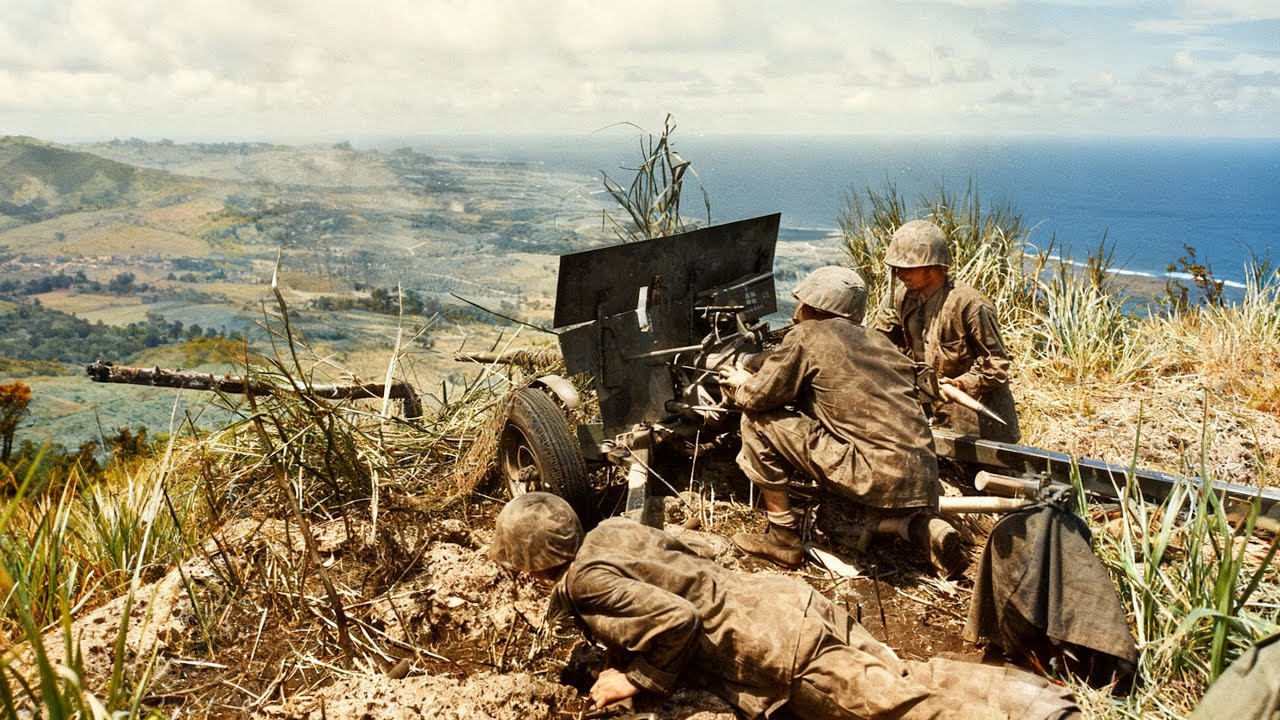
The next few hours would determine whether American industrial firepower or Japanese spiritual warfare would control the first contested airfield in the Pacific campaign. In the humid silence before the storm, Pomeroy checked his ammunition one more time, feeling the weight of each canister round and knowing that his ability to load fast and shoot straight would help decide whether 11,000 Marines stayed on Guadal Canal or joined the long list of Allied forces that had been driven into the sea since Pearl Harbor. The gift of an
opportunity was coming across that sandbar, and he was ready to receive it. Colonel Kioa Ichiki studied the coastal trail ahead as his 917 men settled into temporary positions in the Coconut Groves east of Alligator Creek. The march from Tyvu Point had taken most of the night of August 19th, covering roughly 14 km of difficult terrain while burdened with Type 11 and Type 96 light machine guns, Type 89 grenade dischargers, and two 70mm Type 92 battalion guns.
His men carried 7 days of rations, confident that the operation would conclude long before supplies became critical. The plan was elegant in its simplicity. A night march followed by a dawn assault that would sweep the Americans from their improvised positions and deliver Henderson Field to the Empire before the enemy could organize effective resistance.
The loss of Captain Yoshimi Shabuya’s patrol to Brussia’s marines had been troubling, but not decisive. 33 men killed and five wounded represented roughly 4% of Ichiki’s striking force. An acceptable cost for reconnaissance that confirmed enemy positions along the western approaches to the airfield. What concerned Achiki more than the casualties was the implication that American forces were better organized and more alert than aerial reconnaissance had suggested.
Staff officers at Rabal had estimated Marine strength at between 2,000 and 10,000 men, but Shabuya’s survivors reported disciplined small unit tactics and effective use of terrain that suggested professional soldiers rather than hastily assembled garrison troops. Captain Tetssuro Sawada moved through the ranks of second company, checking weapons and ammunition while wrestling with doubts that had grown stronger since the patrol’s destruction.
He had served at Nomanhan in 1939 where Soviet artillery and anti-tank guns had shattered Japanese infantry attacks with methodical precision. The lesson of that campaign was clear. Concentrated modern firepower could not be overcome by spiritual force alone, regardless of how willing soldiers were to die for their cause.
The terrain ahead looked uncomfortably similar to the killing grounds he remembered from the Mongolian step. open approaches, limited cover, and defensive positions that commanded every avenue of advance. Sawatada found his colonel studying the sandbar through field glasses, noting the width of the crossing and the height of the coconut palms on either side.
The tactical problem was straightforward. Alligator Creek formed a natural obstacle that channeled any assault into predictable lanes, with the sandbar representing the most direct route to the airfield beyond. Ichuki had already decided that speed and shock would carry his men across before the Americans could organize effective resistance.
The Imperial Japanese Army had refined night assault doctrine through years of fighting in China, emphasizing the psychological impact of mass bayonet charges against enemies who lack the spiritual preparation to stand against determined attackers. Sir, Satada said carefully, the Americans have had two weeks to prepare their positions.
If we spread the four companies along the creek bank, we might identify weak points before committing the main force. He gestured toward the sandbar. A frontal assault across open ground gives them every advantage of fields of fire and prepared positions. Ichuki lowered his field glasses and turned to face his subordinate. The shortest distance between two points is a straight line, Captain.
Our men are elite infantry trained for night operations and close combat. The Americans are conscripts who will break when they see Japanese steel coming toward them in the darkness. He pointed toward Henderson Field, visible as a cleared strip beyond the Marine positions. That airfield is the key to this entire campaign.
Every hour we delay gives the enemy more time to bring in reinforcements and heavy equipment. We attack tonight across the sandbar with maximum force concentrated at the decisive point. The philosophical divide between the two officers represented a broader tension within the Imperial Japanese Army between traditional doctrine and emerging tactical realities.
Ichuki embodied the spirit over firepower school that had dominated Japanese military thinking since the Russo-Japanese war, emphasizing moral factors and individual courage as decisive elements in combat. Zatada’s experience at Noman had introduced him to a different calculus, one where artillery concentrations and interlocking machine gun fire could render individual bravery irrelevant.
The debate would be settled not by military theory, but by the performance of weapons and men across 50 yards of sand. Across the creek, Colonel Kates walked his defensive positions one final time, checking the integration of organic and attached weapons that would have to stop Ichiki’s assault without reinforcement.
The First Marine Regiment was spread thin with roughly 3,000 men covering an arc that would normally require twice that number, but the concentration of firepower along the creek bank was deliberately dense. The Browning M1917 water cooled machine guns were positioned to fire in interlocking patterns.
Their crews trained to sustain long bursts without overheating. The 60 mm and 81 mm mortars had pre-registered concentrations on likely assembly areas with forward observers already in position to adjust fire based on actual enemy movement. The two 37 mm guns represented the most unconventional element of Kates’s defensive plan.
Marine Corps doctrine treated the M3 as a mobile anti-tank weapon designed to engage armor at ranges of several hundred yards using armor-piercing ammunition. The decision to employ these guns as fixed anti-personnel weapons loaded with canister represented a fundamental reimagining of their tactical role. Each M2 canister round contained approximately 122 steel balls in a thinwalled casing that would split apart after leaving the muzzle, creating a cone-shaped pattern of projectiles moving at 2500 ft per second.
The effectiveness of this improvised shotgun effect depended entirely on range and target density. At 50 yards, the steel balls would still be tightly concentrated, capable of inflicting massive casualties on infantry formations caught in the open. At longer ranges, the pattern would spread and individual projectiles would lose energy, reducing the weapon’s lethality against dispersed targets.
Kates had positioned his guns to engage targets at the optimal range, gambling that Japanese doctrine would force enemy infantry to mass for their assault rather than infiltrate in small groups. Lieutenant Colonel Pollock moved between the gun positions, coordinating final preparations with section chiefs, who understood that the next few hours would test their improvised tactics against a doctrine refined through years of successful operations.
The 37mm crews had practiced traverse and elevation drills until they could shift between predetermined firing points without conscious thought. Ammunition handlers had stacked canister rounds within easy reach of the loaders, eliminating any delay between shots. Forward observers had established communication with the 11th Marines artillery batteries, ready to call for concentrations that would supplement the direct fire weapons.
As darkness settled over Guadal Canal on August 20th, both sides completed their preparations for a battle that would test competing philosophies of warfare against the unforgiving reality of modern weapons. Ichigi’s confidence rested on the proven effectiveness of night assault tactics and the superior morale of troops trained from childhood to accept death before dishonor.
Kates’s plan depended on the integration of defensive fires and the ability of his marines to remain steady under pressure while Japanese infantry charged across killing grounds measured in yards rather than miles. The sound of movement began to carry across the water shortly after midnight, confirming that the enemy was massing for assault.
Pomeroy and his fellow gunners settled into their positions behind the 37 mm weapons, knowing that their ability to load and fire rapidly would help determine whether Henderson Field remained in American hands. The theoretical discussion between spirit and firepower was about to become a practical demonstration of which philosophy could survive contact with the enemy.
The first sounds of Japanese preparation carried across Alligator Creek at 12:45 a.m. on August 21st. A metallic clanking that forward observers recognized as machine gun tripods and mortar base plates being positioned in the Coconut Grove. Marine listening posts pulled back from the east bank as voices grew louder and movement became more concentrated, leaving the enemy to believe they faced only light screening forces rather than a prepared defensive line.
Pomroy adjusted his grip on the first canister round, feeling its weight and checking the crimped nose that would split apart to release 122 steel balls across the sandbar where Japanese infantry would soon attempt to cross. At 1:30 a.m., Ichiki opened his preparatory barrage with Type 11 and Type 96 light machine guns firing from positions along the east bank.
Their muzzle flashes revealing locations that Marine mortarmen immediately began plotting for counter fire. The Japanese gunners walked their fire across suspected Marine positions, probing for the heavy weapons that would anchor any organized defense. Type 89 grenade dischargers joined the bombardment, their 40mm shells dropping among the foxholes and gunpits where Pollock’s men waited with practiced patience.
The sound built steadily as more weapons joined the chorus, creating the mechanical symphony that preceded every night assault in the Pacific War. Ichuki’s first wave moved toward the sandbar at 135. approximately 100 men from his lead company advancing in the extended line formation that Japanese doctrine prescribed for crossing open ground under fire.
The soldiers moved at a disciplined trot. Their type 38 and type 999 rifles held at port arms, bayonets fixed for the close combat they expected to find on the far bank. Their training emphasized speed and shock, the belief that rapid movement across the danger zone would minimize casualties while maximizing the psychological impact of their arrival in the American positions.
Kates had instructed his machine gunners to hold fire until the Japanese were fully committed to the crossing, letting the enemy advance to the point where retreat would be as dangerous as continuation. The Browning M1917 crews tracked the approaching infantry through their sights, fingers on triggers, waiting for the word that would unleash interlocking fires across the narrow strip of sand.
The 37mm gunners made final adjustments to their aim, knowing that their first rounds would determine whether the improvised shotgun tactic succeeded or failed against a mass of determined infantry. The Marine line erupted at 1:38 a.m. when Pollock gave the order to open fire. Water cooled machine guns began their steady hammering, sending streams of 30 caliber bullets across the sandbar at ranges where individual marksmanship became irrelevant.
The first 37 mm canister round split apart 20 yards from the muzzle, releasing its payload of steel balls in a cone that swept across the lead ranks of Japanese infantry like a giant’s fist. Men fell in clusters rather than individually, cut down by multiple projectiles moving too fast for human reflexes to register.
Pomemeroy had the second canister round loaded and fired within 8 seconds, the gun crew functioning with the mechanical precision of men who understood that hesitation meant death. The steel balls reached the sandbar in 600ths of a second, arriving before the sound of the muzzle blast, turning the crossing into a corridor where physics rather than courage determined survival.
Japanese soldiers who had survived the first volley found themselves running through a space where the air itself seemed solid with flying metal, where the traditional warriors calculation of acceptable risk became meaningless. The intensity of defensive fire exceeded anything Ichiki had encountered in China or planned for in his tactical estimates.
His first wave disintegrated under the combined impact of machine gun bursts and canister rounds with perhaps a dozen men reaching the West Bank alive and unwounded. These survivors fought with desperate courage, grenading machine gun positions and bayonetting Marines in their foxholes, but they lacked the numbers to exploit their brief foothold.
A Marine Reserve Company counterattacked within minutes, clearing the penetration and restoring the defensive line before Japanese follow-up forces could reinforce success. Captain Sawata watched the destruction from the East Bank, seeing his predictions about modern firepower, confirmed in the most brutal possible terms.
The sandbar was littered with bodies, many clustered in groups where canister rounds had caught entire squads in the open. The survivors who straggled back across the creek brought reports that made clear the futility of further frontal assaults. The Americans had turned the crossing into a killing ground where individual skill and unit cohesion provided no protection against weapons designed to engage formations rather than individuals.
Achiki refused to accept the tactical reality his subordinates described, interpreting the first wave’s destruction as proof that insufficient force had been applied rather than evidence that the defensive concept was sound. No. 2:30 a.m. He ordered a second assault with 150 to 200 men, concentrating maximum strength at the point he still believed represented the path to victory.
The Imperial Japanese Army had built its reputation on the willingness to accept enormous casualties in pursuit of decisive results, and Achi saw no reason to abandon this approach when faced with American defenders who might break under sustained pressure. The second wave advanced into defensive fires that had been adjusted based on the first engagement with machine gun crews and artillery observers now familiar with Japanese approach routes and timing.
The 37 mm guns had been repositioned slightly to optimize their fields of fire, creating overlapping cones of steel balls that left no safe passage across the sandbar. Pomroy loaded and fired with automatic efficiency. Each canister round contributing its payload to a barrier of flying metal that turned the narrow crossing into an impassible zone.
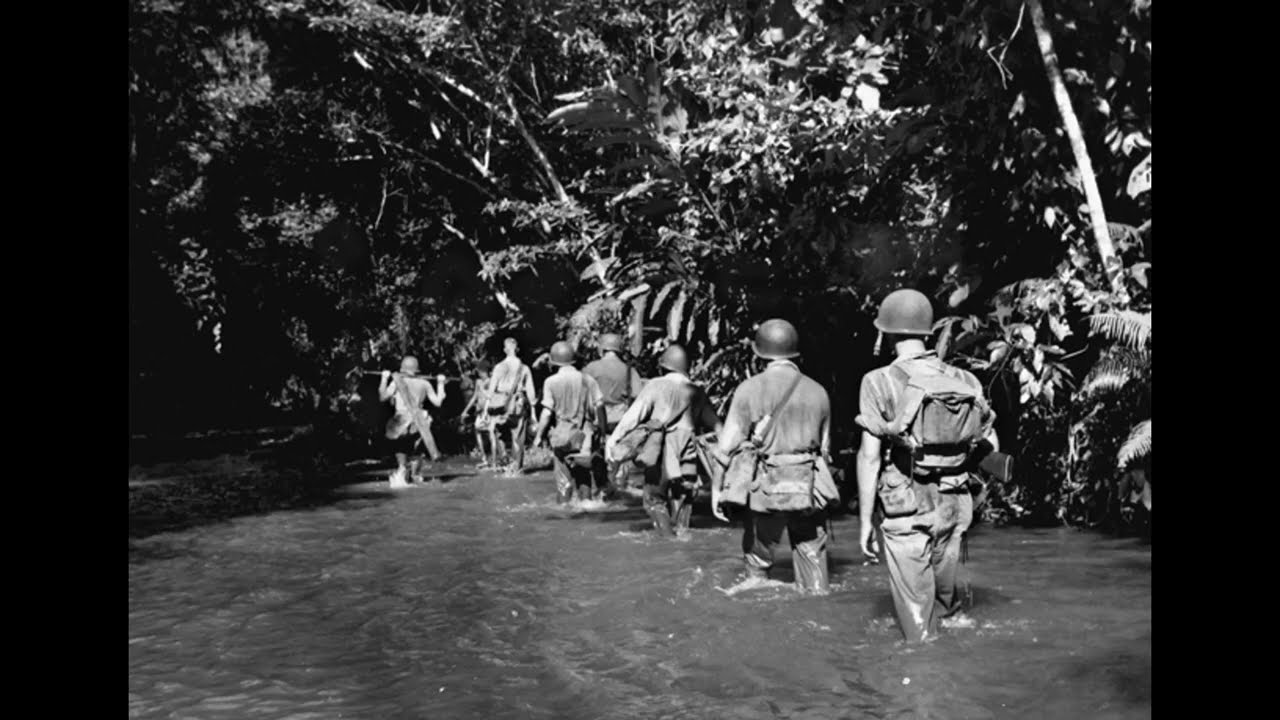
Japanese infantry fell in greater numbers during the second assault. Their concentrated formation providing ideal targets for weapons designed to engage area rather than point targets. A handful of soldiers again reached the marine positions, fighting with the fury of men who understood they would not survive to see another dawn. But the defensive line held against their individual efforts.
The type 38 rifles and bayonets that had proven decisive in Chinese cities became inadequate tools against Marines fighting from prepared positions with interlocking fields of fire. By 3:00 a.m., Ichiki had lost perhaps half his assault force to defensive fires that showed no signs of weakening under pressure.
Marine ammunition supplies remained adequate, casualties were light, and the tactical situation favored continued defense rather than aggressive action. Satada again urged withdrawal to defensive positions where the regiment’s remaining strength could be preserved for more favorable circumstances, but his colonel remained committed to the original plan despite mounting evidence of its failure.
The sound of wounded men calling for help in Japanese and English drifted across the water as both sides paused to assess their situation. Marine medics moved forward to treat their own casualties while Japanese stretcherbears attempted to recover wounded from the bullet swept sandbar. The brief lull allowed gun crews to replenish their ammunition and adjust their positions, preparing for whatever final effort Ichiki might attempt before acknowledging defeat.
As dawn approached on August 21st, the tactical innovation that had transformed anti-tank guns into giant shotguns had proven its effectiveness against the most determined infantry assault the Imperial Japanese Army could mount. The steel balls that filled each canister round had created a barrier more effective than wire obstacles or natural terrain, turning 50 yards of open ground into a space where human courage became irrelevant against the physics of high velocity projectiles.
Pomeroy stacked fresh canister rounds beside his gun, knowing that the knight’s work was not yet finished, but confident that the defensive concept would hold against whatever remained of Ichiki’s strength. The gift of an opportunity had been delivered as promised, and the Marines had received it with the tools and tactics necessary to survive until dawn.
Dawn broke over Alligator Creek at 6:30 a.m. on August 21st, revealing the sandbar littered with bodies clustered in groups where canister rounds had caught entire squads crossing the open ground. The survivors of Achi’s regiment had pulled back into the Coconut Grove on the east bank. Perhaps 200 men occupying defensive positions among the palm trees while marine observers called artillery concentrations on their suspected locations.
The tactical situation had reversed completely from Ichiki’s original plan. Instead of sweeping across the creek to capture Henderson Field, his remaining forces were trapped in a shrinking pocket with their backs to the sea. Colonel Kate studied the enemy positions through field glasses, noting the scattered foxholes and machine gun nests the Japanese survivors had scraped into the coral sand during the pre-dawn hours.
The Coconut Grove provided concealment, but limited protection against the 75mm and 105 mm shells that began falling at 7:22 a.m., shaking the palm trees and sending coral fragments spraying through the defensive positions. Ford observers adjusted fire based on movement and muzzle flashes, walking concentrations through areas where wounded Japanese soldiers called for help in voices that carried clearly across the narrow creek.
Lieutenant Colonel Creswell received orders at 7:45 to cross Alligator Creek upstream with First Battalion, First Marines, and envelope the Japanese pocket from the south and east while units on the West Bank maintain pressure with direct fire. The maneuver would compress Ichiki survivors between the creek and the sea, eliminating any possibility of withdrawal toward Tyvu Point.
Creswell understood that the encirclement had to be completed quickly before the enemy could organize breakout attempts or establish stronger defensive positions in the grove. The crossing began at 8:15 with rifle companies waiting through waistdeep water while machine gunners provided covering fire from the west bank.
Japanese defenders engaged the advancing marines with type 38 rifles and light machine guns, forcing the attackers to move carefully through terrain that favored concealment over maneuver. Individual palm trees became reference points for squads advancing by bounds with bar gunners suppressing suspected sniper positions while riflemen closed the distance to grenade range.
The fighting in the Coconut Grove developed into a series of small unit actions where the 37mm guns on the West Bank could no longer provide effective support. The dense vegetation and irregular terrain made it impossible for gun crews to distinguish between friendly and enemy positions, forcing the engagement to become a contest between rifles, automatic weapons, and grenades at ranges measured in yards rather than hundreds of meters.
Marines advanced from tree to tree, clearing foxholes with bayonets and explosive charges, while Japanese defenders fought with the desperation of men who understood that surrender was not an option. Captain Sawat organized the defense of a cluster of positions near the center of the grove, directing the fire of surviving machine gunners while Japanese riflemen engaged marine squads moving through the palm trees.
His men fought with skill and determination, but their ammunition was limited, and their numbers continued to decline under the pressure of coordinated attacks from multiple directions. The tactical lesson of Nomanhan was being confirmed in reverse. When concentrated firepower was properly applied, individual courage became insufficient to maintain defensive positions against a numerically superior enemy.
Aircraft from Henderson Field joined the engagement at 10:30 with SBD dive bombers and F4F Wildcats making strafing runs along the beach to prevent Japanese survivors from escaping southward toward the sea. The irony was not lost on marine observers. Aircraft launching from the airfield that Ichiki had come to capture were now hunting the remnants of his regiment through the coconut groves where they had expected to celebrate victory.
The tactical situation had collapsed so completely the Japanese soldiers found themselves under attack by the very installations they had marched 25 miles to destroy. The arrival of four M3 Stewart light tanks at 2:15 p.m. marked the beginning of the final phase of the engagement. Each tank mounted a 37mm main gun, identical to the towed weapons that had devastated the night assault.
But now these guns would fire canister at pointblank ranges against individual foxholes and machine gun positions. The tanks crossed the sandbar in single file, their tracks crushing equipment and bodies left from the previous night’s fighting, while their commanders identified targets in the grove ahead. Tank infantry coordination in the Coconut Plantation required careful communication to avoid fraternal fire incidents as Marines and armor advanced through terrain where visibility was limited to a few dozen yards. The
Stewart crews engaged Japanese positions with 37mm canister at ranges of 20 to 30 yards. Each round releasing its payload of steel balls into foxholes where enemy soldiers had taken cover. The effect was devastating. Positions that had withstood rifle fire and grenades were swept clean by weapons that had been designed to penetrate armor, but proved equally effective against personnel at ultrashort range.
Japanese resistance began to collapse by 300 p.m. as coordinated pressure from multiple directions overwhelmed the remaining defensive positions. Individual soldiers continued to fight from isolated foxholes, often figning death and then detonating grenades when Marines approached to check bodies. This tactic forced the attacking forces to adopt increasingly cautious procedures, finishing suspected enemy positions with rifle fire from safe distances rather than risking close inspection of apparently dead opponents.
Colonel Achi died during the final stages of the battle, though accounts differ on whether he was killed by marine fire while leading a final charge or committed suicide as his command disintegrated around him. His death marked the effective end of organized resistance, though scattered firing continued until nearly 5:00 p.m.
as Marine squads cleared the last pockets of defenders from positions throughout the Grove. The transformation from elite assault regiment to scattered survivors had taken less than 16 hours. Most of that time spent in a pocket measuring barely 400 yardds from the creek to the sea.
The final casualty count revealed the complete destruction of the Ichi detachment’s first echelon. Approximately 774 to 800 killed, 15 taken prisoner, and roughly 30 escaped toward Tyu Point out of 917 men who had landed 3 days earlier. Marine losses totaled 41 to 44 killed during the entire engagement, including casualties from the brush patrol and supporting actions.
The arithmetic of modern defensive warfare had proven itself against one of the Imperial Japanese Army’s most experienced regiments. Pomeroy and his gun crew surveyed the results of their night’s work as marine burial details began the grim task of clearing bodies from the sandbar and grove. The 37 mm gun that had seemed obsolete against modern tanks had found new purpose as a giant shotgun, proving that tactical innovation could transform outdated equipment into decisive weapons when properly employed.
The steel balls that had torn through Japanese assault waves represented more than individual casualties. They marked the failure of a military doctrine that had dominated Pacific warfare since Pearl Harbor. As afternoon shadows lengthened across Alligator Creek, the Marines who had survived the night assault began to understand that they had participated in something larger than a local tactical victory.
Henderson Field remained in American hands. The first Japanese ground offensive had been decisively repulsed, and the myth of Imperial Army invincibility had been shattered by a handful of Marines using anti-tank guns in ways their designers had never imagined. The 30 survivors of Ichiki’s first echelon reached Tyu Point on August 25th.
Their reports so devastating that staff officers at 17th Army headquarters initially refused to believe them. Lieutenant General Harukichi Hayaku Take’s intelligence estimates had predicted light resistance from demoralized American forces preparing to evacuate Guadal Canal, not the disciplined defensive action that had destroyed an entire elite regiment in less than 24 hours.
The radioed message that the Ichuki detachment had been almost annihilated short of the airfield forced a fundamental reassessment of enemy capabilities and the tactical assumptions that had governed Japanese operations since Pearl Harbor. The shock extended beyond simple casualty figures to the core beliefs that had shaped Imperial Army doctrine for decades.
Japanese military theory emphasized spiritual factors as the decisive element in combat, teaching that superior morale and willingness to die could overcome material disadvantages through aggressive offensive action. The destruction of 900 experienced infantry at the hands of fewer marines using defensive tactics contradicted everything the army had learned in China and Southeast Asia, where enemy forces had consistently broken under pressure from determined night assaults and bayonet charges. Captain Satada’s
detailed account of the Sandbar engagement reached higher headquarters through survivor interviews and intelligence reports compiled by staff officers trying to understand how American defenders had achieved such disproportionate results. His description of interlocking machine gun fire and anti-tank guns used as giant shotguns provided tactical intelligence that would influence Japanese planning for the remainder of the Guadal Canal campaign.
The lesson was clear but difficult to accept. Concentrated modern firepower properly applied could neutralize traditional infantry tactics regardless of the attacking forces motivation or skill level. Within the first Marine Division, the Battle of Alligator Creek became an immediate case study for defensive planning and weapons employment.
Regimental and battalion commanders analyzed the engagement to extract lessons that could be applied to future operations, focusing particularly on the innovative use of 37 mm guns with canister ammunition. The success of this improvised anti-personnel system led to formal recommendations that the weapons remain in marine tables of organization despite their obsolescence in the anti-tank role for which they had originally been designed.
The tactical implications extended far beyond Guadal Canal as marine units throughout the Pacific began experimenting with similar adaptations of existing equipment to meet operational requirements that Doctrine had not anticipated. The 37mm M3 gun found new life as a direct fire infantry support weapon, particularly effective against Japanese bunkers and prepared positions where traditional artillery could not provide adequate precision.
Units discovered that canister ammunition could be employed at ranges up to several hundred yards, though maximum effectiveness remained concentrated in the 50 to 100yard envelope, where steel ball patterns maintained lethal density. Intelligence officers studying captured Japanese documents found evidence that American defensive tactics and equipment were becoming subjects of serious concern within enemy ranks.
Prisoner interrogations and translated field reports revealed growing respect for marine automatic weapons, artillery coordination, and particularly the 37 mm guns that Japanese soldiers had begun calling the American shotguns. The psychological impact of these weapons appeared to exceed their actual casualties, creating a reputation that influenced enemy planning and morale across multiple theaters of operation.
The Battle of Terawa in November 1943 demonstrated the continued relevance of lessons learned at Alligator Creek when marine assault teams use 37 mm guns with canister loads to clear Japanese bunkers at point blank range. The weapons proved particularly effective in urban combat environments where their rapid rate of fire and area effect could neutralize multiple defenders simultaneously.
Similar applications appeared throughout the Central Pacific campaign as Marine units adapted their equipment to meet the specific challenges of amphibious assault against fortified positions. Frank Pomeroyy’s recollections of the engagement recorded in multiple post-war interviews provided detailed insights into the human dimension of tactical innovation under combat conditions.
His description of loading canister rounds while Japanese infantry charged across the sandbar captured the immediate reality of weapons effects that staff officers could analyze only through casualty statistics and afteraction reports. The emotional impact of watching entire enemy formations disappear under concentrated fire remained vivid decades after the war.
evidence of how technological superiority could create moral as well as physical advantages for forces employing it effectively. The broader strategic implications of Ichiki’s defeat resonated throughout the Japanese high command as subsequent operations on Guadal Canal encountered increasingly sophisticated American defensive preparations.
The September engagement at Edson’s Ridge and the October battles around Henderson Field reflected Japanese attempts to adapt their tactics to counter the firepower concentrations that had proven so effective along Alligator Creek. These adaptations included greater use of infiltration techniques, dispersed approach routes, and preliminary bombardments designed to suppress American heavy weapons before infantry assaults began.
However, the fundamental doctrinal challenge remained unresolved. How could an army trained to emphasize spiritual factors adapt to combat environments where material superiority provided decisive advantages? The Imperial Japanese Army’s uh institutional commitment to offensive operations and close combat made it difficult to acknowledge that defensive tactics employing modern weapons could consistently defeat traditional infantry attacks regardless of the attacker’s skill or determination.
American industrial capacity ensured that innovations like the 37mm canister system could be replicated and refined throughout the war. While Japanese forces struggled with equipment shortages that made tactical adaptation increasingly difficult, the steel balls that had torn through Ichiki’s assault waves represented more than individual projectiles.
They symbolize the growing technological gap between opposing forces and the industrial base that made such innovations possible on a scale the enemy could not match. Veterans of both sides carried memories of the Alligator Creek engagement that shaped their understanding of modern warfare’s human cost and technical requirements. Japanese survivors spoke of the terror induced by weapons that could kill multiple men simultaneously across open ground, while Marine defenders recalled the mechanical precision required to operate complex fire control systems
under extreme stress. These personal accounts provided insights into tactical effectiveness that official reports could not fully capture. The memorial erected at the site of the battle decades later acknowledged both the tactical significance of the engagement and its human cost for all participants. The sandbar, where Ichigi’s men had charged into concentrated fire, became a symbol of how technological innovation could determine combat outcomes, independent of traditional military virtues like courage and unit cohesion.
Visitors could stand where Pomeroy had loaded canister rounds and imagine the moral as well as physical challenges faced by men on both sides of a fight that had been decided by steel balls traveling at 2500 ft per second across 50 yards of coral sand. The transformation of anti-tank guns into giant shotguns represented one example of how tactical creativity could extract maximum effectiveness from available resources when conventional doctrine proved inadequate to operational requirements. The lesson extended beyond
specific weapon systems to broader questions about military adaptation and the relationship between technology and traditional combat skills in an era when industrial capacity was becoming the ultimate arbiter of battlefield success.
News
Admiral Shibazaki Boasted “It Will Take 100 Years to Capture Tarawa” — US Marines Did It In 76 Hours
At 13:30 hours on November 23rd, 1943, Colonel David Shupe stood on a two-mile strip of coral called Betio,…
Japanese Troops Were Terrified When U.S. Marines Cleared Trenches Without Letting Go Of The Trigger
On the morning of August 17th, 1942, at 0917, Sergeant Clyde Thomasson crouched behind a palm tree on Makan Island,…
Japanese Soldiers Were Terrified When .50 Caliber Machine Guns Penetrated Their Concrete Bunkers
On the morning of May 14th, 1945, at 0630 hours, Corporal Lewis Ha crouched behind a coral outcrop on Okinawa’s…
General Hyakutake Ignored The “No Supplies” Warning — And Marched 3,000 Men Into The Jungle To Die
On the morning of December 23rd, 1942, at 0800 hours, Lieutenant General Harukichi Hiakutake sat in his command bunker on…
Colonel Ichiki Was Told “Wait For Reinforcements You Fool” — He Attacked Anyway And Lost 800 Men
At 3:07 in the morning on August 21st, 1942, Colonel Kona Ichiki crouched behind a fallen palm tree on the…
Waiter praised Redford for WRONG MOVIE at Grand Hotel — his response was warmed hearth
Jean Mark had been working at the Gran Hotel daper for six years. He’d served princes, presidents, and movie stars….
End of content
No more pages to load