The train slows in the gray dawn. Frost clings to the wooden planks of the cattle car. The door slides open. Cold air pours in. A woman steps down onto packed dirt. She braces for noise, for shouting, for blows. She has been told what captivity means. She hears nothing. No barking orders, no screams, only boots on gravel. A guard stands still.
His rifle hangs low. Beyond him, rows of tents sit in silence. Smoke rises straight into the morning air. Somewhere a mess tin clinks. A man coughs. The woman grips her coat tighter. Her heart races. This is not what she expected. She waits for fear to arrive. It does not. The quiet feels heavier than sound.
In that moment, the war she knew begins to fracture. The enemy does not look like the enemy she was taught to fear. By early 1945, Germany is collapsing. Allied armies press from the west and east. Cities lie in ruins. Rail lines are shattered. Fuel is scarce. Food is rationed to starvation levels.
The Nazi state still demands loyalty, but its control weakens by the week. Millions of civilians flee advancing fronts. Others are captured as territories fall. The United States Army moves rapidly across Western Europe after the breakout from Normandy in August 1944. By March 1945, American forces crossed the Ryan River.
Entire German units surrender. Civilians caught near military zones are detained for screening. Women serve in support roles across the Reich as clerks, signal operators, factory workers, nurses. Many are swept up during the final months. The Allies classify them as prisoners of war or civilian internees depending on role and location.
The United States prepares for mass captivity. Lessons from earlier conflicts guide policy. The Geneva Convention of 1929 governs treatment of prisoners. The US military commits to strict compliance. Camps are established across France, Belgium, and Germany. Others are built in the United States itself. The scale is enormous.
By May 1945, the US holds over 3 million German prisoners. Logistics dominate planning, food supply, medical care, housing, security. American commanders understand the danger of unrest. They also understand propaganda. The way prisoners are treated will echo after the war. German civilians have been conditioned by years of state messaging, Allied bombing, stories of atrocities, posters warning of brutal enemies.
The Soviet advance confirms many fears. Reports of mass violence spread quickly. The Western Allies are painted with the same brush. Many Germans expect revenge, especially women, especially those in uniform or near military sites. Surrender feels like stepping into the unknown. American camps follow a rigid structure.
Guards are trained to avoid unnecessary force. Discipline is strict. Prisoners are disarmed, registered, and assigned quarters. Barracks or tents are basic but orderly. Food meets minimum caloric standards. Often it exceeds what prisoners received at home in the final months of the war. Medical units screen arrivals for disease and injury.
The goal is containment, not punishment. Silence becomes a tool. Order replaces chaos. For many captives, this calm is more unsettling than cruelty. The human angle begins with expectation. German women arrive braced for humiliation. Many have seen camps run by their own regime. Concentration camps are a whispered reality.
Discipline in Germany has long relied on fear and noise. Orders barked, whistles blown, punishment made public. In American camps, interaction is minimal. Guards rarely speak unless necessary. There is no shouting, no beatings. Women stand in line. They are counted. They receive blankets. Some are given hot coffee. This confuses them.
A few cry, not from pain, but from release. The absence of violence creates space for thought, for guilt, for grief. Some realize for the first time that the world they defended is gone. The tactical angle is rooted in control. Silence is deliberate. American doctrine emphasizes calm authority. Guards are rotated to prevent fatigue.
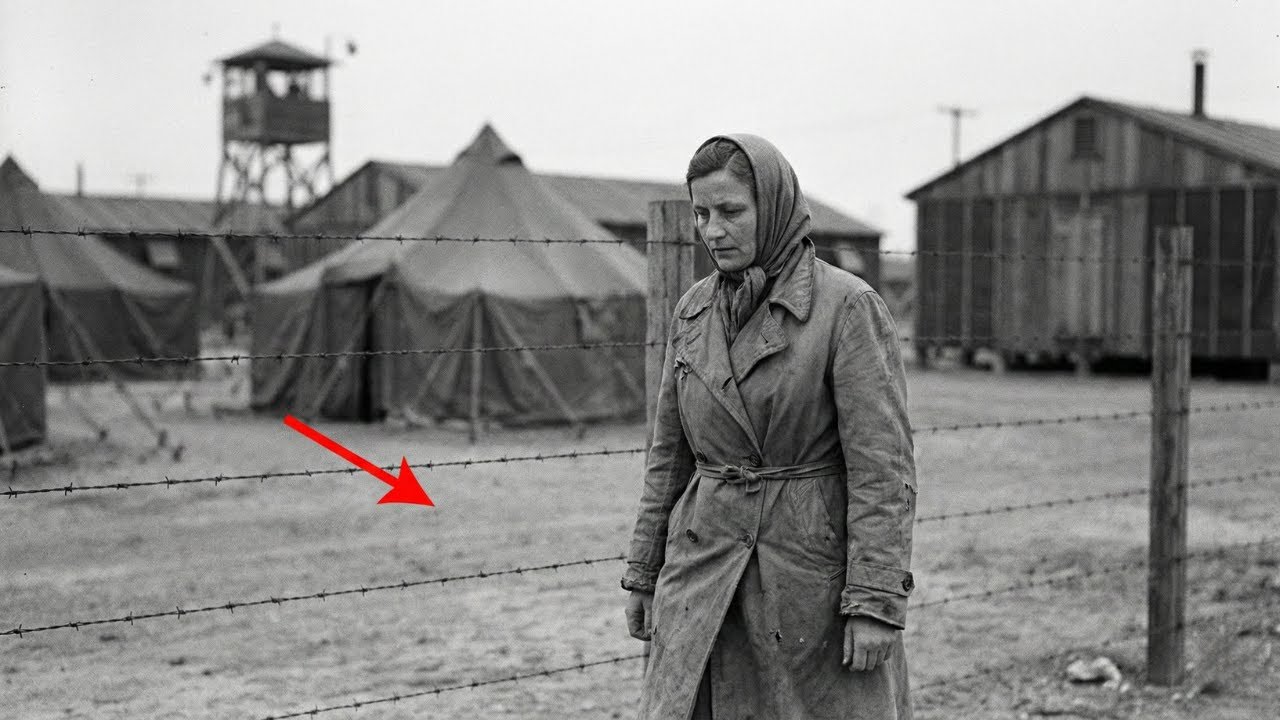
Towers are spaced to provide clear lines of sight. Lighting is consistent at night. Rules are posted in German and English. Infractions are handled quietly. Isolation rather than spectacle. This reduces resistance. It also reduces the risk of collective action. Intelligence officers conduct interviews.
They listen more than they speak. Prisoners talk. They reveal unit movements, local conditions, and hidden supplies. The camp becomes a source of information. Efficiency replaces brutality. The result is fewer incidents, fewer escapes, fewer injuries on both sides. The technological angle shapes daily life. American logistics dominate the camps.
Field kitchens use standardized equipment. Sea rations supplement fresh food. Trucks deliver supplies on schedule. Medical tents carry penicellin, a drug still rare in Germany. X-ray units screen for tuberculosis. Records are kept meticulously. Fingerprints, photographs, index cards. This bureaucratic precision contrasts sharply with the chaos outside the wire.
Many German women have never seen such abundance used without spectacle. The technology is not shown off. It simply works. This quiet competence leaves an impression. It suggests a different kind of power. The enemy perspective is shaped by indoctrination. German women have been told that Americans are undisiplined and cruel, that they mock authority, that they seek humiliation.
In the camps, guards are often young. Many are polite, some are indifferent. A few are curious. They listen to music on portable radios. They smoke. They write letters home. This ordinariness is disarming. It forces prisoners to confront the lies they were fed. Not all do. Some cling to resentment. Others begin to question everything.
The silence gives them time to think. That may be its most powerful effect. The turning point comes in April 1945. News filters into the camps. Berlin is surrounded. Hitler is dead. Germany has surrendered unconditionally. On May 7th, the war in Europe is over. For prisoners, this changes everything. Guards relax slightly.
Count routines remain, but tension eases. The question of repatriation looms. Many women fear returning home. Cities are destroyed. Families are missing. The camps become a temporary refuge. In some American facilities, German women are allowed to organize educational classes, language lessons, basic nursing, child care for those with infants. This is not charity.
It is preparation. The US plans a stable postwar Europe that requires civilians who can function. At the same time, reality intrudes. Allied investigators begin screening for war crimes. Members of Nazi organizations are identified. Some women are separated for further questioning. The comm does not mean forgiveness. It means procedure.
Files are checked. Witnesses are called. Those implicated face transferred to other authorities. Others are cleared. The silence continues. It carries weight now. It marks a shift from war to accountability. Numbers define the scale. By the end of May 1945, American forces process millions of prisoners. Camps expand and contract as people are moved.
Disease rates drop compared to civilian areas outside. Mortality in US camps remains low. This is documented. Not perfect, but consistent. For German women, survival becomes routine. They eat, they sleep, they wait. The absence of chaos allows memory to surface. Some begin to speak about what they saw during the war. Others remain silent.
The camps do not force confession. They allow time. The aftermath unfolds slowly. Through the summer of 1945, repatriation begins. German women are released in stages. Those classified as civilians return first. They are given papers, sometimes food for the journey. They step back into a shattered country. Many carry the memory of the camps with them, not as a place of suffering, but as a place of order.
This creates tension. Some feel shame for feeling relief in enemy custody. Others feel anger toward their own leaders. The contrast is stark. For the United States, the camps become a quiet legacy. They are cited in postwar studies used as examples of compliance with international law. They influence later doctrine.
Korea, Vietnam, Cold War detention policies. The idea that control does not require cruelty gains traction, not always followed, but recorded. For Germany, these experiences complicate the narrative of defeat. Women who expected screams remember silence. They tell their children, their neighbors. The stories spread. They do not erase the suffering inflicted by the regime.
They do not balance the scales, but they add nuance. They show that the end of the war was not only destruction, it was also confrontation with truth. The lesson is grounded. Power can be expressed without noise. Victory does not require humiliation. The American camps did not absolve guilt or heal wounds. They provided a pause. In that pause, individuals saw the enemy as human. That did not change the past.
It shaped the future. In the quiet of those camps, the war ended not with a scream, but with an uneasy silence.
News
“I Could Not Stand”, German Woman POW Weeps When Americans Lift Her Instead
The ground is cold and uneven. Mud clings to boots and hems. Smoke hangs low and smells of burned oil…
“Get These Clowns Out of My Camp”—Why US Command Mocked the SAS Death-Smell Until They BURIED the VC
Get these clowns out of my camp. That is the exact phrase an American colonel used to describe Australian SAS…
Wounded in Vietnam during TET 1968| Don Kaiser’s Story of War, Brotherhood, and Survival.
firing had gotten so intense it was just breaking rice straws off in front of front of our faces. You…
“We Were Starving”, German Women POWs Shocked by American Soup Pots
Late April 1945, a thin mist hangs over a shattered German town. Broken roofs drip from the night rain. A…
The Darkest Secret of Nazi Germany: The Breeding Program That Even Hitler Feared
You remember those old grainy documentaries, the ones that detail the darkest corners of the Third Reich? We often talk…
“Let the Aussies Handle It” — Why Green Berets Stepped Back When Australian SAS Took Over Missions
There’s a line that kept surfacing in afteraction reports, radio chatter, and the quiet spaces between briefings. A line that…
End of content
No more pages to load