The pre-dawn darkness across the eastern front from the Baltic to the Black Sea was shattered on June 23rd, 1944 by the simultaneous opening of over 30,000 Soviet artillery pieces, rocket launchers, and mortars that began the bombardment signaling the start of Operation Bration, the largest military offensive in human history, involving over 2.
3 million Soviet troops, 5,200 tanks, and self-propelled guns, 5,300 aircraft, and logistical preparations on a scale that dwarfed even the Normandy invasion launched just weeks earlier. The offensive timed to coincide with the western Allied campaign in France and carefully concealed through elaborate deception operations was aimed at the complete destruction of German army group center, the vermarked formation defending the approaches to Warsaw and East Prussia.
German generals commanding the threatened sectors understood within hours that they faced catastrophe on a scale exceeding even Stalinrad. But the recognition came too late and with forces too depleted to mount effective defense against Soviet operational art that had evolved from the primitive efforts of 1941 into the most sophisticated military operations of the war.
General Gayog Hans Reinhardt, commanding third Panza Army on the northern sector of Army Group Cent’s front, received the first reports of Soviet artillery bombardment with growing alarm as the scale and intensity became apparent. Reinhardt’s forces were deployed in defensive positions that had been static for months, fortified positions that German doctrine suggested should be capable of withstanding major assaults.
But the Soviet bombardment was unlike anything German forces had experienced. Carefully coordinated fires that systematically destroyed German defensive positions, command posts, communication centers, and artillery batteries before German forces could organize coherent response. The bombardment lasted for hours in some sectors, and when it lifted, Soviet infantry and armor advanced behind rolling artillery barges that prevented German defenders from manning their positions.
Field marshal Ernst Bush, commanding Army Group Center from his headquarters in Minsk, had been warning Adolf Hitler and the German high command for weeks that Soviet preparations indicated a major offensive was imminent. But his warnings about where the offensive would strike had been catastrophically wrong. German intelligence, deceived by elaborate Soviet Mascarovka operations, had concluded that the main Soviet summer offensive would be directed toward Army Group North Ukraine in the south, not toward Army Group Center in the center.
As a result, German mobile reserves, the Panza divisions that might have conducted mobile defense or counterattacked Soviet penetrations, had been positioned to defend sectors that were not attacked, while Army Group Center faced the massive Soviet onslaught with inadequate reserves and forces that were below authorized strength from months of attrition.
General Hans Jordan, commanding 9th Army in the southern sector of Army Group Center, reported within 24 hours that Soviet forces had achieved multiple breakthroughs, that German defensive positions were being bypassed by Soviet mobile groups and that his forces were in danger of encirclement. Jordan’s reports emphasized that Soviet operational methods had evolved dramatically from earlier campaigns.
Soviet forces were no longer conducting frontal assaults that absorbed massive casualties, but were instead identifying weak points in German defenses, achieving breakthrough with concentrated forces and then exploiting success with mobile groups that drove deep into German rear areas before German reserves could respond.
Marshall Georgie Zukov coordinating the northern pinser of operation Batraton as Stavka representative with first Baltic front and third Bellarussian front was implementing operational concepts that represented the culmination of four years of Soviet military evolution. The operation employed sophisticated deception that had convinced German intelligence the attack would come elsewhere.
The artillery preparation was coordinated to achieve maximum shock effect. The breakthrough forces were concentrated at decisive points to achieve overwhelming local superiority. The exploitation forces, tank armies, and mechanized core were positioned to drive deep once breakthrough was achieved. The entire operation reflected operational art that matched or exceeded German capabilities at their peak.
General Gautard Hinrichi, one of Germany’s premier defensive specialists, but commanding fourth army in the path of the Soviet offensive, recognized within days that his forces faced systematic destruction through Soviet operational excellence rather than through Soviet numerical superiority alone.
Hinrichi attempted to implement the flexible defense that had proven effective in earlier battles, allowing Soviet forces to penetrate, then counterattacking their flanks with mobile reserves. But the reserves that this approach required did not exist in sufficient strength. Soviet forces were advancing too rapidly for German counterattacks to be organized and Soviet air superiority prevented German mobile operations during daylight hours.
Marshall Constantine Roasovvski commanding first Bellarussian front in the southern pinser of the operation demonstrated the kind of operational command that the Red Army had developed through bitter experience. Roasovski coordinated multiple armies advancing on parallel axes, exploited success where German defenses proved weaker than expected, reinforced penetrations with fresh forces committed at decisive moments, and maintained operational tempo that gave German forces no time to organize coherent defense. Roasovsky’s
front encircled the German garrison at Babruisk within days, trapping over 40,000 German troops in a pocket that would be systematically destroyed. Field Marshall Bush attempting to organize some response to the catastrophe unfolding across his entire front requested permission from Hitler to authorize tactical withdrawals that might save encircled forces and allow establishment of defensive positions further west.
Hitler’s response was predictable and catastrophic. orders to hold every position to counterattack Soviet penetrations and to hold cities designated as fortified places regardless of encirclement. Bush was forbidden from authorizing the kind of mobile defense that might have preserved German forces instead being required to implement static defense that ensured German units would be encircled and destroyed.
General Kurt von Tippolskirk who replaced Jordan as commander of fourth army after Jordan was killed inherited a command that was disintegrating under Soviet pressure. German divisions that had been under strength before the offensive were being systematically destroyed through encirclement operations that reflected Soviet mastery of operational art.
The city of Vitbsk, designated by Hitler as a fortified place to be held at all costs, was encircled by Soviet forces within days. The 53,000 German troops trapped in Vitbsk were ordered to hold the city rather than attempt breakout, and most were killed or captured when the pocket was reduced. General Wilhelm Hassa, commanding 27th Corps, including forces trapped at Vitbsk, received Hitler’s order to hold the city and understood it was a death sentence for his command.
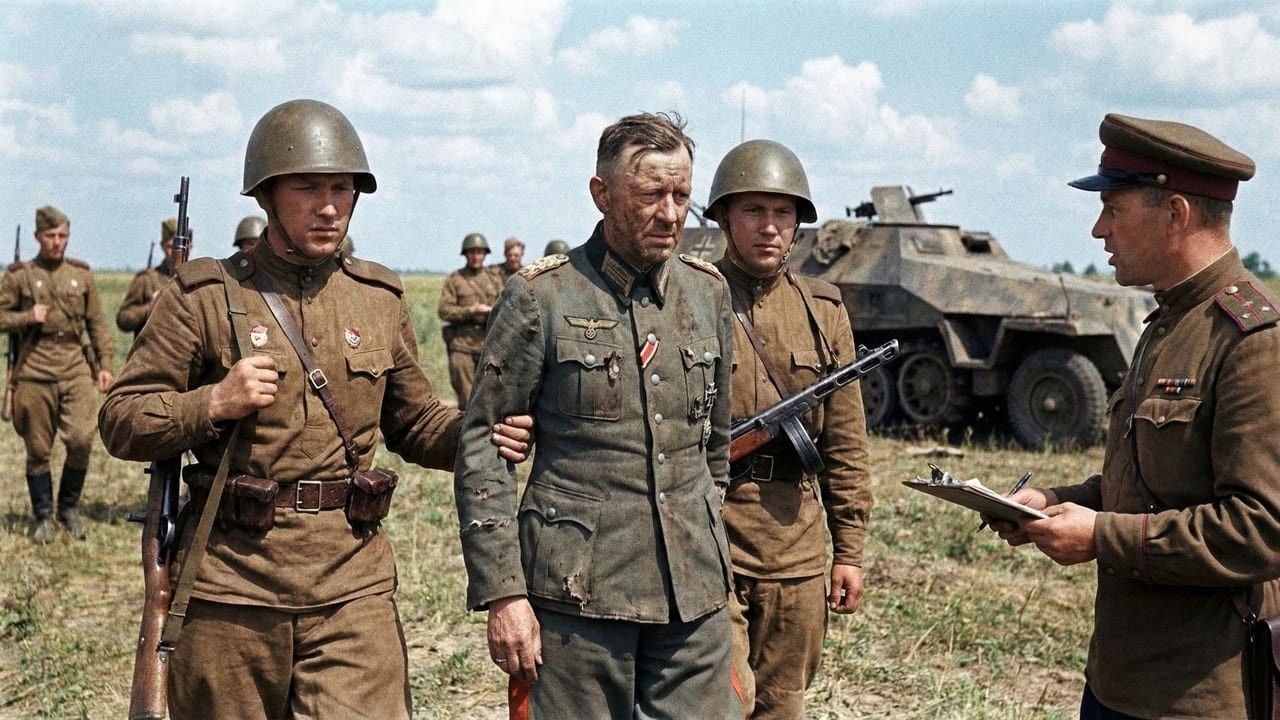
Hassa attempted breakout operations against Hitler’s explicit orders, but the breakout came too late and with forces too depleted to succeed. Hassa himself was captured, becoming one of dozens of German generals captured or killed during Operation BRAN in a demonstration of how completely Soviet forces were destroying not just German units but German command structure.
The encirclement of Minsk, the capital of Bellarussia and site of Field Marshall Bush’s headquarters demonstrated Soviet operational tempo that exceeded German capacity to respond. Soviet mobile forces, tank cores and mechanized cores equipped with T34 tanks supported by IL2 Sturmovic ground attack aircraft and sustained by logistics that allowed continuous operations advanced over 150 mi in less than a week, bypassing German defensive positions and reaching Minsk before German forces could establish defenses.
The forces that Bush had positioned to defend Minsk were encircled east of the city and Minsk itself fell on July 3rd just 10 days after the offensive began. General Dear Pansa Troopen Vulta von Hunesdorf attempting to organize mobile defense with Panza forces that were grossly inadequate for the mission found that Soviet operations prevented effective German maneuver.
Soviet air superiority meant that German armor could not move in daylight without being attacked by IL2 Sturmovixs that were nearly immune to German anti-aircraft fire. Soviet operational intelligence identified German concentrations and directed artillery fires or air strikes against them before German forces could attack.
Soviet operational tempo meant that by the time German counterattacks were organized, Soviet forces had already advanced beyond the positions being counterattacked. Field marshal Walter Model summoned to replace Bush as commander of Army Group Center on June 28th after 5 days of catastrophic defeats arrived to find a situation that even his defensive expertise could not salvage.
Model was Germany’s best defensive commander, the general who had stabilized desperate situations on the Eastern front through aggressive defense and mobile operations. But Model recognized immediately that operation begration had created conditions where stabilization was impossible. Soviet forces had achieved breakthroughs across the entire front.
German reserves did not exist in strength needed to contain the penetrations and the forces that remained were encircled or retreating in disorder. General Hines Scudderion, acting chief of the general staff at Armed Forces High Command, received situation reports from Army Group Center that documented disaster exceeding even the Stalinrad catastrophe.
Entire German divisions were being destroyed. core and army headquarters were being overrun or encircled. The operational map showed Soviet penetrations creating pockets and threatening to encircle additional German forces. Gderrion attempted to brief Hitler on the magnitude of the disaster and to request authorization for strategic withdrawal to defensive positions that might be held.
But Hitler refused to accept that Army Group Center was being systematically destroyed. The Soviet operational concept for Bratian, named after the Russian general who had fought against Napoleon in 1812, employed deep operations theory that Soviet military theorists had developed in the 1930s, but had been unable to implement effectively in the war’s early years.
The operation featured simultaneous penetrations at multiple points, rapid exploitation by mobile forces before German reserves could respond, encirclement of German forces through converging advances, and sustained offensive operations that gave German forces no opportunity to establish stable defensive lines. The sophistication of Soviet planning and execution demonstrated how far the Red Army had evolved from the force that had nearly been destroyed in 1941.
Marshall Ivan Konv commanding first Ukrainian front south of the main BRAN operation launched supporting offensives that prevented German forces from shifting reserves northward to contest Bration. Konv’s operations tied down German mobile reserves that might otherwise have been committed to stopping Soviet advances in Bellarussia.
The coordination between multiple fronts managed by Stavka and executed by front commanders demonstrated Soviet capability for strategic level operations coordinating multiple army groups across vast distances toward unified objectives. The destruction of German army group center proceeded with mathematical precision through July as Soviet forces systematically reduced pockets, pursued retreating German forces and advanced toward Warsaw and East Prussia.
German casualties exceeded 300,000 men killed, wounded, or captured. losses that included not just soldiers but officers, specialists and headquarters staffs whose experience and expertise could not be replaced. 28 German divisions were completely destroyed. Another 70 divisions suffered severe losses, reducing them to fractions of authorized strength.
General Friedrich Hosbach attempting to organize defensive positions along the Vistula River that might stop Soviet advances toward Warsaw found that the forces available were grossly inadequate. The divisions that appeared on organizational charts consisted of battalionsized remnants. The armor that tables of organization showed included tanks and self-propelled guns destroyed weeks earlier.
The officers and NCOs whose experience made German forces effective had been killed or captured at rates that left surviving units led by personnel who lacked training or experience for their positions. The liberation of Minsk on July 3rd was followed by liberation of Vnius on July 13th, then by Soviet forces reaching the Vistula River and approaching Warsaw by late July.
The operational tempo, advancing over 350 miles in five weeks while destroying German forces and liberating major cities, exceeded anything Soviet forces had achieved in previous operations and demonstrated capability for sustained offensive operations that German forces could no longer match. Field Marshall Model attempting to establish some defensive line that could delay Soviet advances found that Soviet operational methods made traditional defensive approaches ineffective.
When German forces established defensive positions, Soviet forces would bypass them and encircle them from the rear. When German forces attempted mobile defense, Soviet air power and artillery would devastate them during movement. When German forces concentrated for counterattacks, Soviet intelligence would identify the concentrations and Soviet fires would disperse them before attacks could be launched.
General Eric Fonmanstein, who had been relieved as commander of Army Group South Ukraine earlier in 1944, reflected from forced retirement that Operation Bration represented the culmination of Soviet military evolution that German commanders had been warning about for years. Soviet forces had learned from their defeats, had developed operational concepts that matched German capabilities, had built tank armies and air armies that could execute deep operations, and most critically had developed commanders like Zhukov, Roasovski, and Konev, who were equals to
the best German generals. Mannstein had argued for flexible defense that would trade space for preserving German forces, but Hitler had refused, and Operation Bration demonstrated the consequences of Hitler’s strategic rigidity. The encirclement and destruction of 100,000 German troops east of Minsk, comparable in scale to the Stalinrad encirclement, demonstrated Soviet capability for creating and reducing large pockets.
Soviet forces would encircle German formations, then reduce them through artillery bombardment and infantry assault while simultaneously driving westward to exploit success. The forces trapped in pockets were systematically destroyed while Soviet mobile forces continued advancing, creating conditions where German forces faced continuous retreat punctuated by catastrophic encirclements.
General Hans Jurgen Style, commanding the garrison at Vnius, designated as another fortified place to be held at all costs, attempted to hold the city against Soviet encirclement and assault. Style recognized that holding Vnius was pointless when German forces lacked the strength to conduct relief operations and when the city’s defense consumed forces that might have escaped to fight elsewhere.
But Hitler’s orders were explicit and style’s garrison was destroyed when Vnius fell to Soviet assault after brief siege. The appearance of Soviet IS-2 heavy tanks and ISU152 assault guns during operation bagration demonstrated Soviet technological advancement that matched their operational evolution. These vehicles were superior to most German armor and were being produced in quantities that German industry could not match.
Soviet T34/85 tanks, improved versions of the T34 that had shocked German forces in 1941 were being deployed in tank armies that gave Soviet forces mobile striking power, exceeding German Panza forces. The material balance that had favored Germany in 1941 had shifted decisively to Soviet advantage by 1944. Marshall of the Soviet Union Stalin monitoring the operation from Moscow and coordinating with Stavka understood that operation bagration was not just military victory but political achievement. The liberation of Bellar
Russia and advance toward Warsaw demonstrated Soviet power to Western allies negotiating postwar arrangements. The destruction of German army group center ensured that Germany would face simultaneous pressures from east and west that would force Germany to divide inadequate resources. The operation demonstrated that Soviet forces could conduct strategic operations matching Western Allied capabilities, ensuring Soviet voice in postwar European arrangements.
The German generals who survived Operation Bration and continued fighting through the remainder of 1944 and into 1945 carried knowledge that the Eastern Front was lost, that Soviet forces had achieved operational and material superiority that Germany could not overcome and that continued resistance would only prolong inevitable defeat.
Field Marshall Model, General Reinhardt, General Von Tippleskirk, and other commanders attempting to defend East Prussia and Poland understood they were fighting delaying actions with forces that were shadows of formations that had existed before Batratian. When the Red Army launched the largest offensive in history on June 23rd, 1944, German generals commanding the threatened sectors were unprepared for the scale, sophistication, and overwhelming power of Soviet operations.
The recognition that they faced catastrophe came quickly, but the forces needed to prevent catastrophe did not exist. The flexibility needed to conduct effective defense had been forbidden by Hitler, and the Soviet operational art that had evolved through years of bitter warfare had reached maturity that exceeded German capacity to counter.
Operation Batratian destroyed German army group center, liberated Bellarussia, brought Soviet forces to the gates of Warsaw, and demonstrated conclusively that the Red Army had become the most powerful military force in Europe, a force that would drive relentlessly westward until meeting Western Allied forces in the heart of Germany and raising the Soviet flag over the ruins of Berlin.
News
“I Could Not Stand”, German Woman POW Weeps When Americans Lift Her Instead
The ground is cold and uneven. Mud clings to boots and hems. Smoke hangs low and smells of burned oil…
“I Expected Screaming”, German Woman POW Stunned by the Silence of American Camps
The train slows in the gray dawn. Frost clings to the wooden planks of the cattle car. The door slides…
“Get These Clowns Out of My Camp”—Why US Command Mocked the SAS Death-Smell Until They BURIED the VC
Get these clowns out of my camp. That is the exact phrase an American colonel used to describe Australian SAS…
Wounded in Vietnam during TET 1968| Don Kaiser’s Story of War, Brotherhood, and Survival.
firing had gotten so intense it was just breaking rice straws off in front of front of our faces. You…
“We Were Starving”, German Women POWs Shocked by American Soup Pots
Late April 1945, a thin mist hangs over a shattered German town. Broken roofs drip from the night rain. A…
The Darkest Secret of Nazi Germany: The Breeding Program That Even Hitler Feared
You remember those old grainy documentaries, the ones that detail the darkest corners of the Third Reich? We often talk…
End of content
No more pages to load